Setting the Table: Systems of Abundance
By Ven Loetz
5-7-2026
It’s been 3 years since Ven has made an entry here, but they have not been idle! In fact, Ven has been quite occupied with their studies on Earth systems and cultures. The main focus has been on the use of art as both a healing technology and a tool for scientific inquiry. The culmination of these studies was displayed in a university gallery.
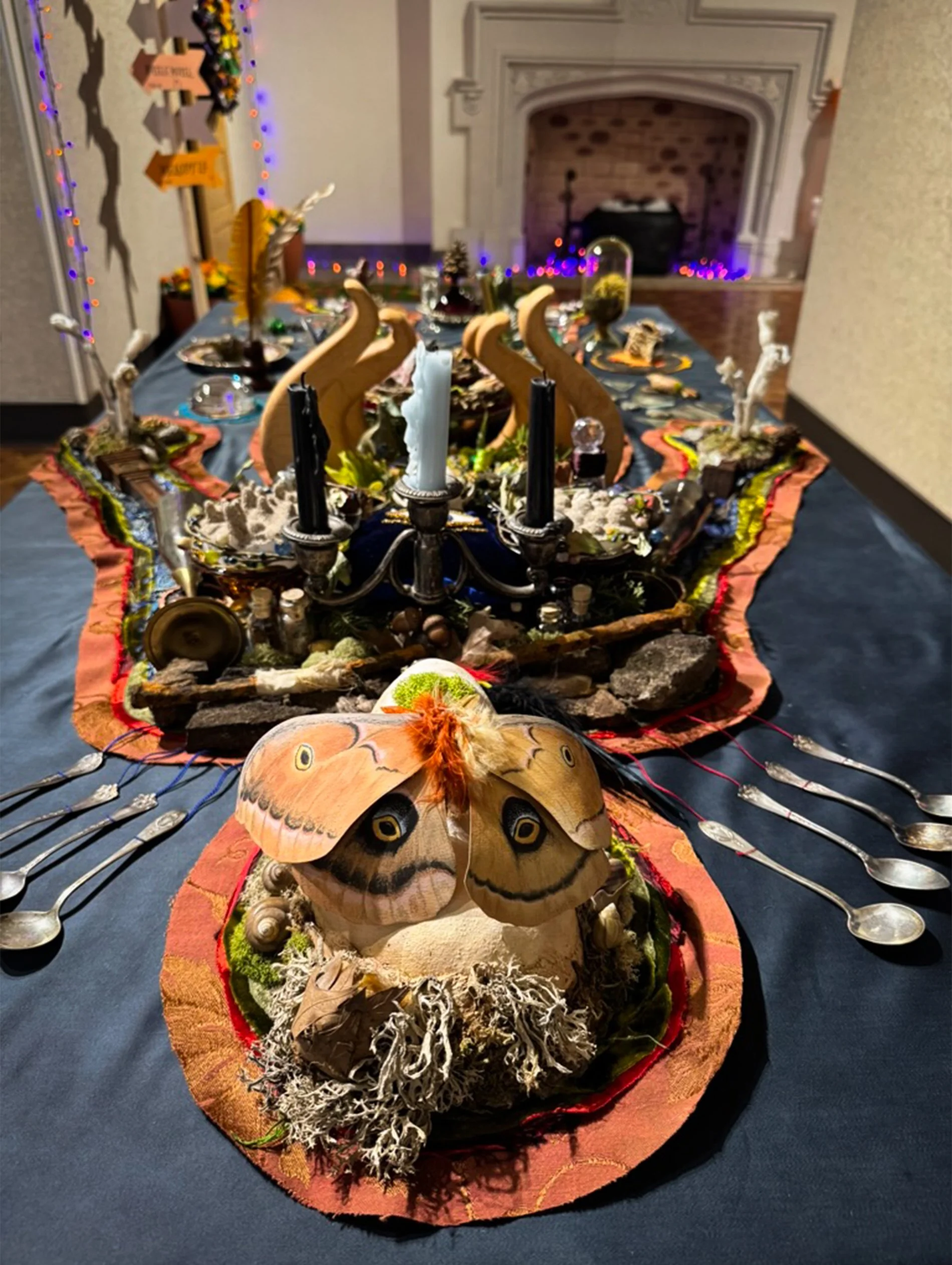
Artist Statement from the gallery show:
A Systems Approach to Stress and Autoimmune Disease: Fostering Self-Compassion Through Art Therapy
Ven Loetz
“Your body is an altar to your ancestors.” (Strand, 2021)
In 1979, the same year I was born, Urie Bronfenbrenner published his ecological systems theory of development (Bronfenbrenner, 1986). Psychology textbooks ever since have featured a lovely page of colorful concentric circles with causal arrows pointing in various directions of influence among environments such as school, home, or culture of origin. They serve as the address of development; the fluid context into which a child is born and must learn to swim.
There is growing evidence that these larger systemic structures can impact human health and wellbeing in complex ways across the lifespan through chronic stress. While autoimmune diseases effect roughly 5% of the overall population, marginalized and historically oppressed groups are disproportionately impacted. For example, women make up at least 63% of cases and Black, Latinx, neurodivergent, and LGBTQ+ individuals also have higher incidents.
Through this project, I have been exploring how larger systems impact our internal systems; our bodies, minds, microbiome, cell walls, DNA, hormones, and a whole lot of looping multidirectional causal arrows. Time acts on these inner circles as well; a world of process, repetition of breath, heartbeat, circadian rhythm, age, illness, and the growing of new selves. Even in the earliest hint of life’s beginning, before the story gets underway, we are impacted by the arrows of the larger concentric rings.
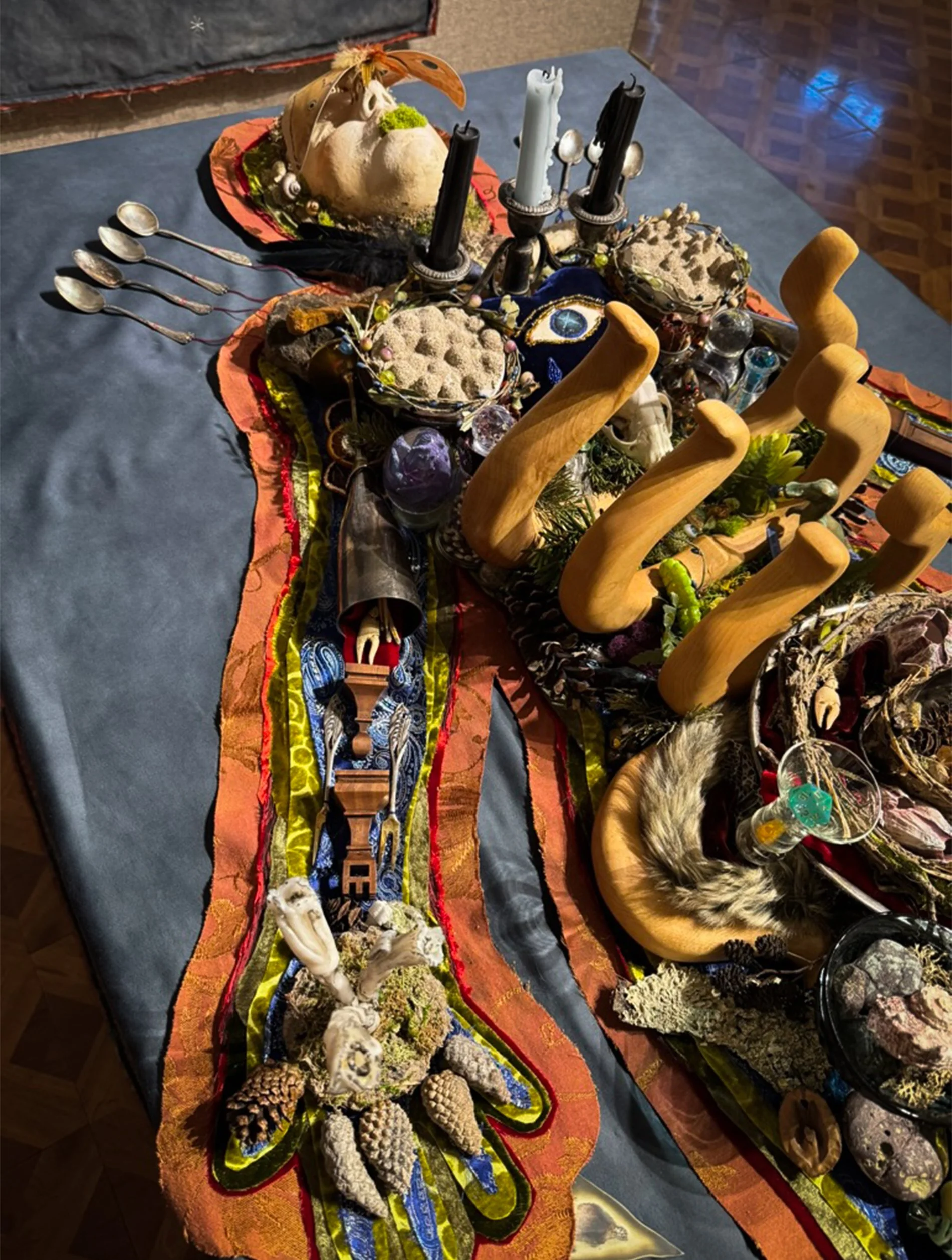
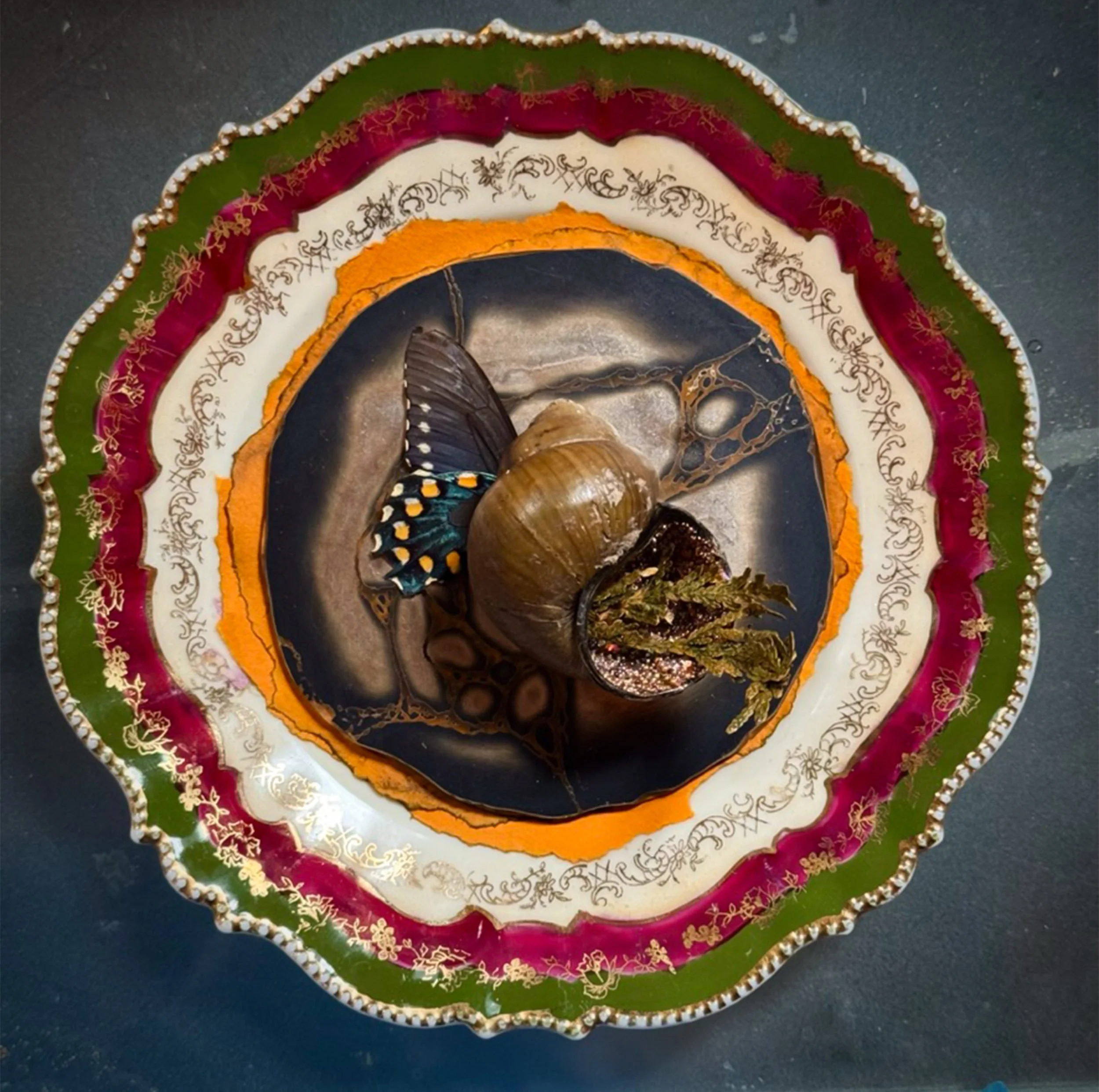
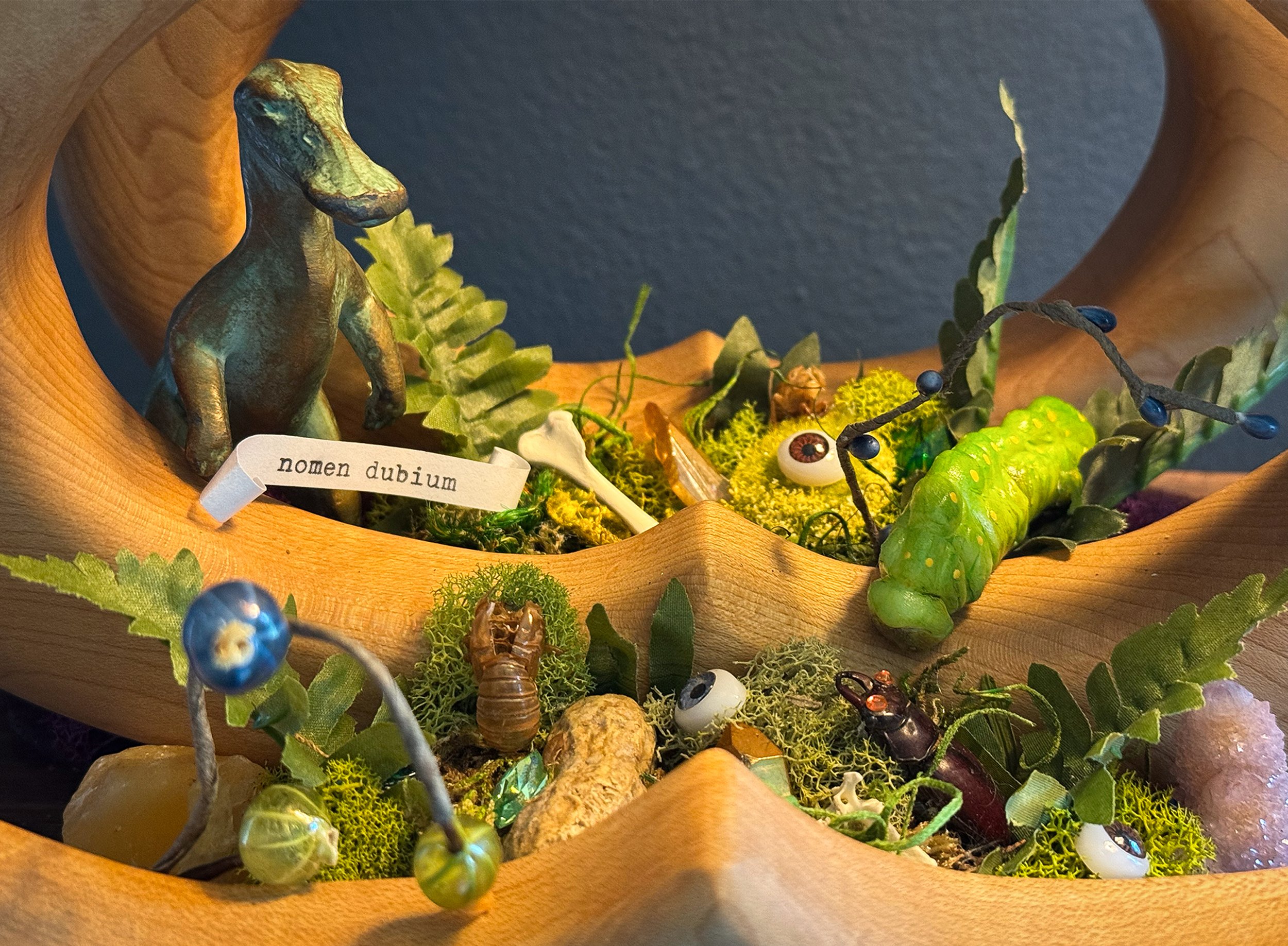
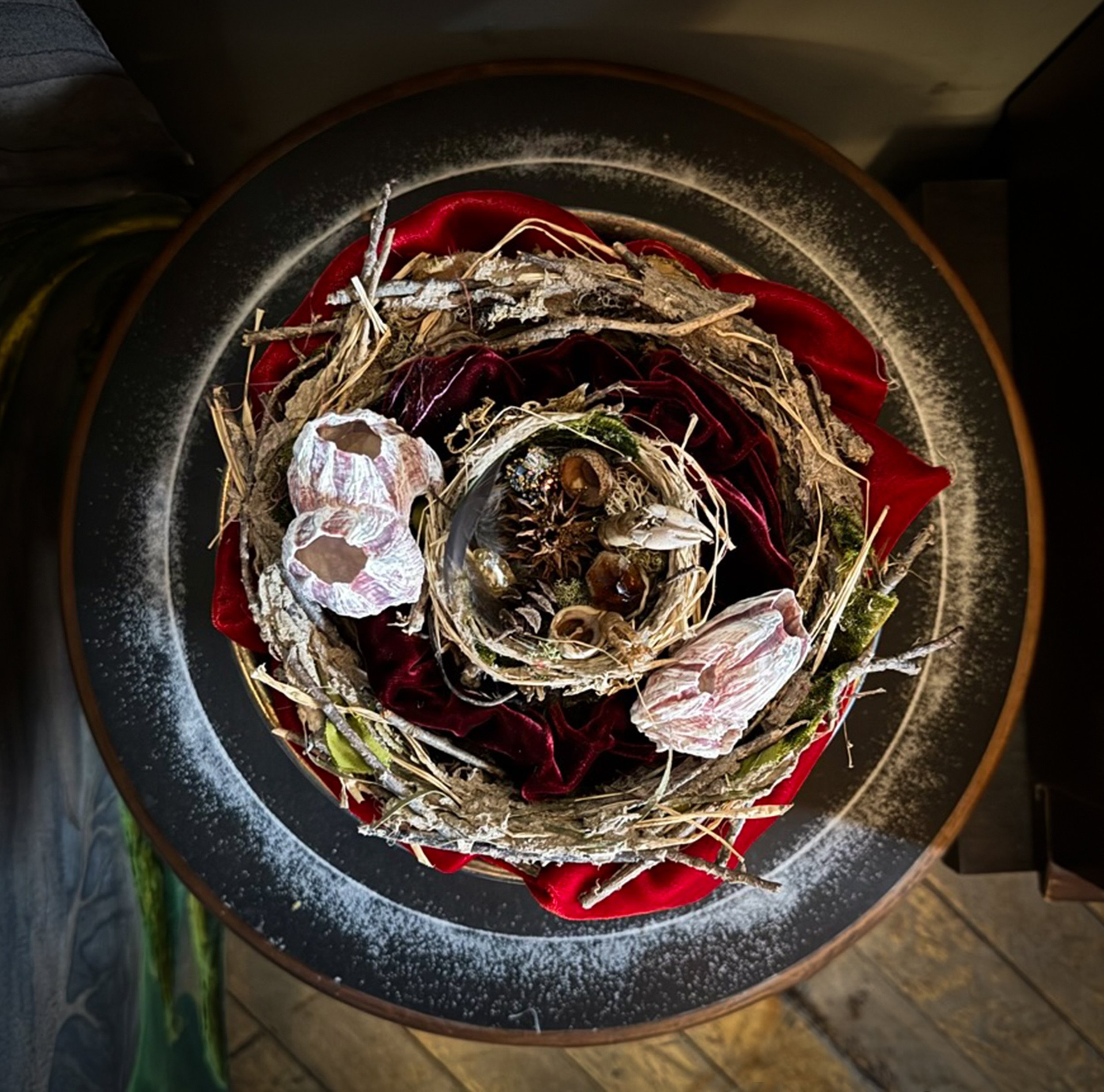
In this installation, I used art therapy concepts to contemplate my own ecological development and autoimmune conditions exploring those concentric circles and the many possible causal arrows that hit their mark. The wall hanging is an art-based genogram of my family. It’s a star map sewn from repurposed bedding; a cosmic yet intimate lived history. The tracing of my body is made from retired linens and curtains. On top of this unusual table runner, I’ve arranged personal and found objects, sculptures, and natural findings to relationally converse with my inner systems and bodily heritage. Through this process, I’ve been delighted and surprised to find an abundance of internal and external resources and happy as well as hurtful accidents. My investigations were informed by Bronfennbrenner’s theories, Family Systems Theory, Internal Family Systems (IFS), process philosophy, evolutionary developmental biology, and the installation art of Jennifer Angus.
Having gone through this process myself, I hope to better conceptualize the complexity of clients’ lives to help them navigate stressful systems and foster self-compassion through art.
Ven’s Academic Research:
A Systems Approach to Minority Stress and Autoimmune Disease: Using Art-Based Genograms, IFS, and Body-mapping to Foster Self-Compassion
by Ven Loetz
Introduction
External systems, both large and small, have a significant impact on shaping the lifespan, social identity, and physical health of a person (Bronfenbrenner, 1986). A reasonable question might be whether and to what extent these systems effect individuals with equal force. Theories such as Minority Stress Theory (Frost & Meyer, 2023) and Weathering (Geronimus, 2006) examine the unevenness of systemic pressures and their resulting negative health outcomes. Autoimmune diseases are one such health outcome where disparities in marginalized populations are well documented (Abend et al., 2025; Buie et al., 2023; Collins et al., 2014; Kim et al., 2022; Logel et al., 2024; McDougall, 2017; Papaloukas & Williamson, 2025). Given the established relationship between onset of autoimmune processes and stress (Song et al., 2018) this poses unique challenges for mental health professionals working with marginalized populations. How does a clinician therapeutically address the stresses imposed by oppressive systems without activating shame or blame narratives within a client? Where is a client’s sense of agency within such systems and is it possible to alleviate proximal stressors and mitigate harmful internalized social narratives?
Art therapy processes can address these concerns in a variety of ways. Visual art making provides avenues for externalization, embodiment, and symbolization in addition to a sense of mastery, sensory feedback, and aesthetic pleasure (Vaisvaser, 2024). In light of this, how would one go about developing a framework combining systems-based theory with art therapy modalities?
This review proposes that autoimmune disease in marginalized populations can be conceptually framed as a scale-entwined phenomena (Harte et al., 2024) occurring relationally and relativistically (Noble et al., 2019) between multiple levels of biological and social systems. Using elements of complex systems theory as an analogous framework, client concerns can be conceptualized across multiple scales of experiencing: social oppression, family systems, psychological stress, immune function, and embodied identity. With a foundational understanding that these system levels shape one another recursively throughout the lifespan, mapping these relationships can be done therapeutically and creatively using art therapy processes and existing theories of counseling. For example, one could map the family system using an art-based genogram (McGoldrick, 2020; Schroder, 2015). This would help to map out relational patterns, family secrets, as well as medical and mental health histories. Learning these patterns and opening lines of communication about these stories that are not often spoken of would help situate a person’s issues as being more than just their own. It can also be a map for identifying family strengths and stories of resilience. Doing this with art offers a deeper level of processing and can permit more personalized and culturally sensitive symbolism than the traditional graphic language of genograms (Barsky, 2022; Schroder, 2015).
The next step I would embark on is to combine art therapy body tracing with Internal Family Systems (IFS) parts mapping to visualize and somatically map internalized relationships and medical history (Lummis, 2015; Schwartz, 2021; Skop, 2016).
These art processes embrace and explore the sometimes-overwhelming complexity of hierarchical systems and how they impact mental and physical health. They would serve as a starting point for conceptualizing the rich experiences of clients and the overlapping and multidirectional forces that all individuals are subject to. In capturing that richness, clients may better be able to understand and make peace with their health conditions in a way that does not invoke shame or blame. Over-simplification of biological and cultural forces can act as a tool of oppression by imposing seemingly easy solutions onto already-burdened individuals rather than on the systemic structures and institutional violence they are subjected to. Acknowledging and embracing the complexity opens space for self-compassion. Externalizing these complex relationships makes them available for reorganization and appraisal (Vaisvaser et al., 2024) while illuminating possible sources of agency and resilience.
Literature Review
Systems Theories and Scale Entwinement
In 1979 Urie Bronfenbrenner published his ecological systems theory of development (Bronfenbrenner, 1986). Psychology textbooks ever since have featured a lovely page of colorful concentric circles with causal arrows pointing in various directions of influence between and among the microsystem, mesosystem, exosystem, and macrosystem of a child’s life. These rings are meant to convey locations such as school, home, or culture of origin. It serves as the social address of development; the fluid context into which a child is born and must learn to swim. Bronfenbrenner’s (2006) later versions would include a chronosystem to account for time in the form of repetition and societal change. His last iteration published posthumously in 2006, was renamed the bioecological theory and featured a model of Process-Person-Context-Time (PPCT) (Bronfenbrenner, 2006 as cited in Rosa & Tudge, 2013). Navarro and Tudge (2023) have gone on to propose a Neo-ecological theory to account for increasingly complex virtual connections through and between the developmental rings. They drew attention to the fact that technology now allows one to be simultaneously immersed within multiple levels of microsystems, mesosystems, and macrosystems.
One criticism I have of Bronfenbrenner is that his microsystem (the family) is not nearly micro enough. Inside the circle, the juicy center he simply labeled “the individual” and later the “person” in the PPCT model, there are no concentric rings or arrows (Bronfenbrenner, 2006 as cited in Rosa & Tudge, 2013). In his later bioecological theory, he included “person characteristics” with mentions of “genetic defects”, handicaps, and illness that might impact how a person interacts with the environment and, just as importantly, noted that the environment reciprocally acts on the person characteristics (Navarro & Tudge, 2023).
Yet in truth there are even more systems within; systems of systems really (Schwartz, 2013; Kuhn et al., 2024; Noble et al., 2019). Perhaps we should invoke a series of “nanosystems”. There is a body, a mind, a microbiome, cell walls, DNA, hormones, a few million pores, and a whole lot of multidirectional arrows (Schwartz, 2013; Kuhn et al, 2024; Tauber, 2015; Margulis, 1967; Fischetti & Christiansen, 2021). The chronosystem acts on each of these inner circles as well; an inner world made of process, repetition of breath, of heartbeat, circadian rhythm, and racing thoughts. And let us not forget age, illness, and the growing of new selves. Development itself begins inside the nanosystem of another “individual”. And, in approximately half of cases, the egg cells of the next generation are already there, nested even further within. Even in that earliest hint of a beginning, before the story gets underway, we are impacted by the arrows of the larger concentric rings (Lala et al., 2024; Dias & Ressler, 2014). While I am not fond of visualizing the body as a scoreboard for trauma (Van der Kolk, 2014), the larger systems do impact us like shockwaves through generations (Dias & Ressler, 2014), or through more subtle pressures, pokes and prods. As I contemplate development and autoimmune conditions, I wonder if there might be a way to examine those concentric circles and the causal arrows that hit their mark.
Looking beyond the field of psychology and developmental theories, complex systems science offers a dynamical theory of how causality can be entwined between the various levels of Brofenbrenner’s hierarchical systems (Bronfenbrenner, 2006; Hart et al., 2024) as well as the nano-scale levels of physiological processes (Noble et al., 2019). Computer scientist Melanie Mitchell (2023) defined a complex system as one in which large networks of individual agents with no central control give rise to emergent collective behavior through interactions. This spontaneous emergence arises from the interplay of simple operating rules, information processing, and adaptive learning as complexity is added to the system. The emergence of a new level of system is described as a self-organizing or bottom-up process (Mitchell, 2023; Noble et al., 2019). Hart et al. (2024) theorize how top-down causation can act reciprocally between system levels creating entangled bottom-up and top-down processes. Note that this is a different but related concept to the general systems theory “feedback loop” which occurs horizontally within one level of system rather than vertically through a multi-system hierarchy (Hart et al., 2024).
If bottom-up emergence results from increases in complexity (while not becoming too chaotic), how does top-down causation work? Jessica Flack (2017) explained that it works by the opposite principle: by removing complexity from the system, members of an adaptive system can make estimates about macroscopic phenomena and engage in collective computation. The removal of “noise” (seemingly extraneous information) creates bounded rules that can restrict behavior at lower levels through collective decision making. These complex processes can occur in many types of layered, hierarchal systems in the realms of cellular biology, biochemistry, information sciences, economics, natural ecosystems, social systems, neuroscience and more (Mitchell, 2023). Given that all of these systems can interact bidirectionally with one another, within and between levels, how do the simplified boundaries imposed from higher levels exert constraints on lower-level agents?
Defining the Boundaries of the Self
The concept of the self is at the heart of philosophical thought, religious belief, and psychological discourse. Medical diagnosis and treatment require an understanding of bodily self, yet the term is surprisingly and stubbornly difficult to define. What is the self? What makes us unique individuals? Where is the boundary between one being and the next? In terms of development, does the self change or remain constant? If the goal of therapy is change, is it the self that is changing? Or something else?
Whether discussing the psychological topics of boundaries, autonomy, and shame, or understanding biological processes within a person’s body, it seems imperative to be able to distinguish between “self” and “not self”. While a full review of this subject is beyond the scope of this paper, there are several schools of thought that can inform our thinking within the context of conceptualizing art therapy, autoimmune disease, and scale-entwined systems. Here we will explore the self in terms of modern process philosophy, concepts from theoretical biology, and the Internal Family Systems (IFS) therapy definition of Self (Schwartz, 2013). In later sections we will look at medical definitions as they relate to the immune system as well as the self in context of intersectional social identities.
Philosophical Definitions of self
Western process philosophy began in ancient Greece with Heraclitus and was later explored by German Idealism in the first half of the 19th century. It was developed more fully in the beginning of the 20th century with Alfred North Whitehead’s “philosophy of organism” (Seibt, 2025). Process philosophy offers a theory of the self as an ongoing process whereby continuity is defined by an individual’s experiences. In other words, it is the on-going-ness of first-person phenomenological experience combined with observations of one’s patterns and tendencies over time that constitute a sense of self. This is in contrast to more prominent western dualist philosophical and religious traditions that describe self as a physically separate body housing a metaphysical eternal soul (Seibt, 2025). Object oriented ontologies categorize an object or subject as having core essences that makes it a particular “thing” or “kind” (Dupre & Nicholson, 2018). Process philosophy would view objects and subjects as “precipitates” of processes. In other words, “things” are a convenient shorthand that allows us the agency to interact with our surroundings. An object has a boundary while a process is a complex open system (Dupre & Nicholson 2018; Noble et al., 2019). The processual self-as-verb not only aligns with current biological theories (Noble et al., 2019) but also shares an affinity with eastern and indigenous modes of thought (Seibt, 2025; Kimmerer, 2013). Present-day process thought centers on an organism’s embeddedness and interdependency within and between larger systems; its genetics, ecology, and the interplay between internal and external processes all serve to define the organism. As process philosophy has incorporated ideas of complexity science, the self could be seen as an emergent property of all these phenomena as they play out over time (Seibt, 2025).
Internal Family Systems Therapy definition of Self
Internal Family Systems (IFS) is a model for psychotherapy that considers the mind to be naturally and normatively divided into “parts” (Schwartz, 2013). A family therapist named Richard C. Schwartz began developing this model in the 1980’s. Many other theoretical and historical models starting with Freud and Jung have also viewed the mind as being made up of multiple subcategories. Additionally, the American Psychiatric Association’s (2022) Diagnostic and Statistical Manual of Mental Disorders (5th ed., text rev.; DSM-5-TR) describes a more intense pathological condition called Dissociative Identity Disorder in which parts of the mind become split off from each other. Schwartz (2013) makes sure to emphasize this pathological state is not what he is describing in IFS. The American Psychological Association (n.d., 2025) defines self as “the totality of the individual, consisting of all characteristic attributes, conscious and unconscious, mental and physical.” This would be in keeping with the idea of a Self composed of parts.
According to the IFS model, Self is an inherent essence that exists at the core of each person while the other parts of the mind take on a variety of roles and functions throughout the lifespan. By his description, the Self fits into an object oriented ontology. This central Self is described with “the 8 C’s”; calm, curious, creative, compassionate, courageous, connected, confident, and having clarity (Schwartz, 2013). That’s a lot of alliteration but gives a memorable and accessible list of traits for Self-identification.
Interestingly, when introducing IFS to other cultures, confusion around Schwartz’s definition of Self began to surface. For example, the IFS description of Self matches something Zen Buddhists refer to as no-self (Schwartz, 2013). In a workshop with the Society of Indigenous Psychologists, Suzan McVicker (2014) introduced IFS as a potential therapeutic framework for Native American Indians (NAI). Using the model of Indigenous Knowledge Research, these psychologists discussed the ways IFS could be adapted for this population. They agreed on renaming Self as “the knowing Center” and described it as being connected to the Great Knowing Center and the knowing Centers of other beings (McVicker, 2014). In eastern cultural perspectives and indigenous perspectives, what Schwartz describes as Self is not something unique to a particular individual, but rather a deep internal relationality with others.
Biological Definitions of Self
In terms of an organism’s boundary of “self” versus “not self”, physical definitions are both permeable and dynamic. The average human body contains about 30 trillion human cells, at least 38 trillion bacteria, many viruses, extra-cellular fluids, and calcium scaffolding (Fischetti & Christiansen, 2021). We shed and replace approximately 330 billion cells every day, though replacement rates differ depending on cell type with brain cells being among the longest-lived (Fischetti & Christiansen, 2021). Between 55% and 75% of the human body is water (depending on a person’s age) and this is cycled through the body and replaced over the course of mere days (Popkin et al., 2010). The body’s physical composition, it seems, is in a constant state of exchange with its environment. While our genes provide the basic architectural plan for the body, if our definition of biological selfhood were limited to only cells containing our nuclear DNA (our genetic code), our bodies would be unrecognizable and nonfunctioning. In fact, our cells also contain mitochondrial DNA, now understood to be the result of ancient symbiosis between two single-celled organisms (Margulis, 1967). Even within our own cells, a biological definition of selfhood remains somewhat hazy.
While one’s genetic code does dictate likelihoods for how one will physically and mentally present, many other factors such as environmental exposures, the modular and constructive processes of development, random events, and culture can influence how those genes are expressed or silenced (Lala et al., 2024). This makes the biological definition of self some combination of genetics, developmental processes, and experiences that impact each other reciprocally and continuously across the lifespan.
Self as Agent
Noble et al. (2019) emphasized that nature is a continuum and the boundaries we impose on natural systems are always going to be somewhat arbitrary. While drawing boundaries to define ourselves allows us to act meaningfully as agents in our environments, it simultaneously reduces complexity in the process. Given that humans are one level of many complex natural systems, it seems logical this reduction of complexity may have downward causal implications (Hart et al., 2024).
Some theories of the origins and nature of life itself depend on agency (Mitchell, 2023). In this conceptualization, the definition of life itself, down to the cellular level could be described as matter that has agency. In this definition, life is matter that is thermodynamically asymmetrical as it actively works against entropy (slowing it down). This aligns with the theoretical models for scalar-entwinement which are variations of equations derived from those used to model thermodynamics (Harte et al., 2024). This also aligns with process philosophy’s concept of life processes as homeorhetic (Dupre & Nicholson 2018) with true homeostasis being an impossible state for living systems. Homeorhetic processes are those that are always on a trajectory rather than in a stable or balanced state (Dupre & Nicholson 2018).
If we are to view the self as an agent whose ongoing phenomenological experience is on a processual trajectory, how do we help clients find purpose, meaning, and emotional regulation and some sense of control on the course of their journey?
Self-Compassion
Compassion can be described as a feeling that results from witnessing the suffering of another combined with a desire to give assistance or comfort. This unique emotional state likely evolved for the purposes of caring for vulnerable offspring, finding mutually supportive mates, and forming cooperative social relationships (Goetz, et al., 2010). How can compassion be applied to oneself rather than others? According to IFS, compassion is one of the defining qualities of Self (Schwartz, 2013). If one is to direct this quality internally, perhaps it would be offered from Self to one’s internal parts. In a process-oriented interpretation, perhaps self-compassion could be conceptualized as reflection on one’s past or continuing suffering combined with a desire to comfort oneself in times of stress.
Stress and the Immune System
The immune system is a complex network of cells, tissues, organs, and their products that protect the human body from infections. When responding to injury or illness, the immune system’s activation is referred to as inflammation. To respond appropriately, it has long been theorized the immune system must be able to distinguish self from non-self (Lleo et. al, 2010). However, this is not such a simple task. For example, the immune system also needs to allow beneficial bacteria to persist to aid in digestion and various maintenance tasks. Additionally, some parts of the immune system perform cellular “housekeeping” roles such as repairing or destroying damaged cells. These two tasks of mediating internal relationships with beneficial and commensal organisms (often referred to as the microbiome) and cleaning up one’s own cellular waste products put the immune system in a complex relationship with “self” and “non-self” (Tauber, 2015). An alternative to the self-not-self (SNS) theory of the immune system is the Danger Model (DM) (Matzinger, 2002) in which activation of the immune response is triggered by cellular damage or signs of threat. In this model, chemical signals from damaged cells illicit a chain of responses. Cellular damage could result from any number of sources; from foreign pathogens to tumor growth, from traumatic injury to surgical incisions, there are many situations in which cells have evolved to signal “danger” and initiate an adaptive response (Matzinger, 2002).
Alfred Tauber (2015) suggested, that according to the SNS model, the immune system’s concept of self “might be better regarded as only a metaphor for a ‘figure’ outlined by the immune system’s silence, i.e., its non-reactivity. That figure is inconstant and modified upon certain conditions.” (p. 53). In other words, the self would be defined by what the immune system does not react to with inflammation. Tauber goes on to explain that one of the “certain conditions” that would modify this definition is pregnancy; the pregnant person’s immune system must include the developing embryo or fetus as part of the self, granting protection from the immune defenses. The task of defining the self is not only a delicate balance of mediation within the immune system, but many parts of the immune system are also intimately entwined with the central nervous system and the endocrine system which regulates hormones. The relationships between these three systems are multidirectional, meaning that change to one system impacts the other two and vice versa (Kuhn et al., 2024).
Understanding that these relationships are both intimate and complex, how then does stress impact the immune system? The term stress was coined by endocrinologist Hans Selye in the 1930’s (Kuhn et al., 2024). He used the term to refer to changing environmental conditions and the adaptive responses organisms (in his research, mice) exhibited as a result. He distinguished between healthy stress (eustress) and deleterious stress (distress). Hormones released in the body during stressful situations include cortisol, which is regulated by connections between the hypothalamus, the pituitary gland, and the adrenal gland. This communication pathway is referred to as the HPA axis and connects the brain’s responses to stress with that of the rest of the body (Kuhn et al., 2024).
Further research has demonstrated differences in immune function based on acute stress exposures and chronic ones. Acute stress results from a single short-lived event as opposed to chronic stress which persists over longer periods of time. Acute stressors can activate and even strengthen the immune system while chronic stress can wear immune function down and result in dysfunction. Further research has broken down chronic stress into categories such as the social defeat paradigm, restraint stress, chronic unpredictable stress, and early-life stress. All forms of chronic stress are found to contribute to immune and neurobiological dysfunction in various ways. More specifically, social defeat stress, which includes conditions of bullying, aggression, and chronic subordination, is linked to increases in pro-inflammatory biomarkers such as cytokines; proteins produced by the immune system in its activated state (Kuhn et al., 2024).
Autoimmune Disease as Cross-scale Dysregulation
One of the ways in which the immune system can become dysregulated is called autoimmune disease. This is a category of more than 100 disorders that effect a diverse array of bodily tissues and functions. Some of the more well-known autoimmune diseases are systemic lupus erythematosus (SLE), type 1 diabetes, multiple sclerosis (MS), Crohn’s disease, rheumatoid arthritis (RA), and psoriasis (Samuels et al., 2022). The most common definition of autoimmunity describes the immune system losing the ability to discern between self and non-self. Historically, it has been theorized that immune cells called autoantibodies begin to attack and destroy healthy tissues as though they were an invader. This has often been framed as a loss of self-tolerance (Lleo et al., 2010). However, the pathogenic role of autoantibodies in autoimmune processes is now seen as less than clear following many decades’ worth of immunological discoveries such as the roles of B lymphocytes, regulatory T cells, and cytokines (Lleo et al., 2010). Interestingly, losses in the microbiome have also been documented in autoimmune patients (De Luca & Shoenfeld, 2019). Tauber (2015) proposed that autoimmune disease is not simply the loss of tolerance for one’s own cells, but a disruption in the ability to identify healthy cells from damaged ones, helpful microbiota from harmful ones. It is currently unknown if changes in the microbiome are a causal factor, a result of autoimmune processes, or a combination of both. In this respect, Matzinger’s (2002) Danger Model may be helpful, conceptualizing autoimmunity as the result of repeated cellular signals responding to threat.
Autoimmune diseases are currently understood to be chronic meaning they lack a cure and go through periods of dormancy and disease activity commonly referred to as “flares” (National Institutes of Health, 2024). Some can be managed with medication and lifestyle factors but are never fully resolved. Once diagnosed with a chronic illness, many individuals go through a mental and physical adjustment that can be additionally stressful (Chan et al., 2009). Negative social constructions of disability can include narratives of shame and social exclusion. Difficulties in accessing or navigating healthcare systems can result in even more stress and worse long-term outcomes. Onset of chronic illness can also socially, emotionally, and financially impact the individual’s family which puts stress on their primary support system (Chan et al., 2009).
Adding to these sources of stress, the most commonly prescribed medications for autoimmune diseases have long lists of risks and side effects (Escoter-Torres et al, 2019). Glucocorticoids or corticosteroids are a category of prescription steroids that were first used in 1949 to treat rheumatoid arthritis (Nicolaides et al., 2018). Since then, they have become the first-line medication for a wide range of inflammatory conditions including asthma, SLE, autoimmune forms of inflammatory bowel disease, and more (Alturaymi et al., 2023; Escoter-Torres et al, 2019). These medications work by suppressing genes responsible for inflammatory processes (Barnes, 2006; Escoter-Torres et al., 2019). However, because glucocorticoids are a synthetic form of cortisol, they also activate a stress response and impact the functioning of the HPA axis (Escoter-Torres et al., 2019; Nesereddin et al., 2024; Nicolaides et al., 2018). Glucocorticoids such as prednisone, prednisolone, and budesonide have long been known to have a range of physical side effects including acne, Cushing syndrome, weight gain, osteoporosis, diabetes, glaucoma, and more (Alturaymi et al., 2023; Nasereddin et al., 2024; Sulais et al., 2024). However, the effects these medications have on mental health is chronically underreported in medical documentation (Sulais et al., 2024) leading to epistemic injustice in healthcare settings (Kidd & Carel, 2017). Side effects reported by patients include disrupted sleep, mood disturbances, anxiety, and even suicidal ideation (Sulais et al., 2024). Some studies have linked glucocorticoid use with onset of severe mental health conditions such as mania, major depression, and even psychosis (Alturaymi et al., 2023; Nasereddin et al., 2024).
The relationship between stress and autoimmune conditions can thus become a vicious feedback loop where the stress caused by living with and managing the disease contributes to its exacerbation (Alzaabi et al., 2025). This feedback loop may help explain why 24% of patients with one autoimmune condition go on to develop additional ones (Samuels et al., 2022).
It is important to emphasize here that I am not implying stress is the cause of autoimmune diseases, but that it appears to be a significant contributing factor in both initial onset and flares of symptoms. As the complex relationships between the immune system, nervous system, and endocrine system might suggest, strong associations between stress and the onset of autoimmune diseases have been well-documented (Song et al., 2018). The underlying causes of autoimmune disease are still not fully understood and likely include a complex interplay of genetic predispositions, stress, various types of infections and their treatments, changes in the microbiome, and a wide range of environmental exposures (Lleo et al., 2010). Noble et al. (2019) described nano-level physiological interactions and their relationships with higher level systems as being less like a flow chart with causal arrows and more like a “cloud of happenings” in which all the innumerable variables involved are bidirectionally dependent upon one another (p.6).
Minority Stress and Autoimmune Disease
While autoimmune diseases effect roughly 5-7% of the overall population (Lleo et al., 2010), marginalized and historically oppressed groups are disproportionately impacted (Abend et al., 2025; Buie et al., 2023; Collins et al., 2014; Kim et al., 2022; Logel et al., 2024; McDougall, 2017; Papaloukas & Williamson, 2025). For example, women make up at least 63% of autoimmune diagnoses with many estimates landing much higher at 80% globally (Abend et al., 2025; Angum et al, 2020) and black, latinx, neurodivergent, and LGBTQ+ individuals also have higher incidents compared to the general population (Buie et al., 2023; Collins et al., 2014; Kim et al., 2022; Logel et al., 2024; and Papaloukas & Williamson, 2025).
One hypothesis for these health disparities is Minority Stress Theory (MST). Ilan Meyer (2023) first proposed this model in 2003 to conceptualize and address the factors that contribute to mental and physical health disparities observed in sexual and gender minority populations (LGBTQ+). The model has continued to be developed upon and expanded in the intervening years to account for historical/societal changes, developmental concerns, and intersectional identities (Frost & Meyer, 2023; Rivas-Koehl, et al., 2023). MST distinguishes general stresses that anyone can encounter during the life course from distal and proximal stressors specific to sexual and gender minorities. Distal stressors could include laws and policies that target LGBTQ+, microaggressions, discrimination, violence, or threat of violence. Proximal stressors include internalized stigma, expectations of rejection, fear of distal stressors, and the need to hide one’s identity in various settings (Frost & Meyer, 2023; Huang & Chan, 2022). This last item is of particular significance to mental health as the decision to come out, when to come out, and to whom can create complicated and prolonged stressful conditions within families, friend groups, faith communities, educational, and work settings (Collins et al., 2014). It can mean maintaining and switching between multiple social identities which takes enormous emotional and cognitive effort. This contributes to bisexuals having poorer mental health than other sexual minorities due to not being able to fully claim an identity within either the dominant heteronormative culture or an LGBTQ+ social scene (Roi et al., 2019). Whichever realm a bisexual finds themselves participating in, they may feel internalized shame or disloyalty toward the other half of their sexual identity (Roi et al., 2019).
A similar phenomenon is often described in literature on racial and ethnic code switching. Johnson et al. (2022) describes this as a process by which individuals alter their speech and mannerisms to better blend into white culture. This can include changing languages entirely, altering one’s dialect, and carefully managing body language. This is done both for social reasons of making white conversational partners more comfortable and for the purposes of avoiding stereotype threat in workplaces and educational settings. However, they must adjust back to their own culturally specific speech and body language when interacting with family and friends of their own background to avoid being accused of “acting white”. While everyone engages in subtle forms of impression management regardless of race, the constant and exaggerated nature of racial and ethnic code switching can become a source of chronic stress and mental fatigue. It also implies a shame narrative around one’s culture of origin (Johnson et al., 2022).
Arline T. Geronimus et al (2006) proposed the theory of “weathering” to describe how chronic stress experienced by Black populations could contribute to higher rates of chronic illnesses. The effects she documented were strongest in Black women ages 35-64 and evidenced additional premature aging burdens for women who spent longer periods of time caring for chronically ill relatives. These patterns persisted even when the data were controlled for socioeconomic status, suggesting racial and gendered stressors as relevant correlations for health outcomes. Geronimus (2023) has since expanded on this work as it relates to maternal mortality rates, pregnancy complications, and the effects of the Covid 19 pandemic on Black populations. Noting that these effects extend to those who are high achieving in their fields, Geronimus (2023) concludes that the stress of stereotype threat and performing alternate social identities has cumulative physiological consequences across the lifespan. While Geronimus’s (2023) research focused mainly on Black Americans, she noted that many other racial minorities experience significant health disparities including Latinx, Indigenous, and Asian Americans. One does not need to look far to find evidence supporting this claim (Buie, 2023; Chen, 2005; Ferucci, 2020; McDougall, 2017).
As mentioned in earlier sections, 63-80% of autoimmune diagnoses are found in women and those assigned female at birth (Abend et al., 2025; Angum et al, 2020). A host of biological reasons have been theorized to explain this disparity (Angum et al., 2020; Kronzer et al., 2021; Quintero et al., 2012) including genetic factors related to the X chromosome, hormonal factors due to the relationship between the endocrine system and the immune system, and biological mechanisms by which the immune system accommodates a fetus during pregnancy. An additional factor that often goes overlooked in medical research is that women, globally, are responsible for 76% of unpaid caregiving (Weeks et al., 2025). In a large survey of American households, researchers looked at the cognitive labor performed by mothers in the form of scheduling, coordinating, decision making, monitoring, and maintaining social ties (Weeks et al., 2025). In couples with children, both physical labor and cognitive labor tended to fall along gender lines often regardless of which partner earned a higher wage. Much like Geronimus’s research into race and weathering, this effect extends to higher paid working mothers who often end up performing more domestic labor as a result of “doing gender”, in other words, over-performing perceived roles of femininity to meet the expectations of others (Weeks et al., 2025; Syrda, 2023).
Another group that frequently adopts complex and effortful social performance are neurodivergent persons. The word neurodivergent was first coined in the late 1990’s by autistic activist Kassiane Asasumasu (Archie, 2025). While the term is sometimes used as a shorthand for those diagnosed with autism spectrum disorder (ASD) and/or attention deficit and hyperactivity disorder (ADHD), it is also frequently used socially to include those with sensory processing differences, dyslexia, tic disorders like Tourette’s, and more (Kroll et al., 2024). Social camouflage for neurodivergence means intentionally adopting behaviors of the dominant neurotypical population to seek belonging and find success in academic and occupational endeavors. These are behaviors that come naturally and unconsciously to most people, but are very conscious and intentional for neurodivergent persons, especially those on the autism spectrum (Alaghband-rad et al., 2023). The DSM-5 diagnostic criteria for autism spectrum disorder includes deficits in social communication, social reciprocity, and understanding and utilizing non-verbal signals, such as eye-contact, gestures, and posture. Additionally, due to sensory processing differences, autistic persons frequently engage in repetitive and sensory seeking behaviors (American Psychiatric Association, 2022) commonly referred to as “stimming” as a form of self-regulation. In social situations, a neurodivergent individual may attempt to compensate and adjust for these traits by carefully observing and mimicking those around them and by suppressing stimming behaviors. Studies have found camouflage or “masking” behaviors can lead to significant psychological distress with higher rates of depression, anxiety, and even increased suicide risk (Alaghband-rad et al., 2023). Because sensory processing differences can include hypersensitivity to a variety of stimuli, many neurodivergent individuals struggle to function in noisy, brightly lit, or chaotic environments making common social settings such as parties, school lunchrooms, and sporting events particularly stressful (Neufeld et al., 2021). Both ASD and ADHD additionally come with executive function impairments or differences that often make keeping up with school, workplace, and household management tasks difficult (American Psychiatric Association, 2022). With all of these combined stressors, social settings and daily tasks that most people navigate with ease can be daunting and exhausting to someone with a neurodivergent identity.
Intersectionality and Comorbidities
It should additionally be noted that there is significant overlap between LGBTQ+ and neurodivergent populations (George & Stokes, 2018; Goetz & Adams, 2024; Warrier et al., 2020). Neurodivergent individuals are also more likely to be diagnosed with epilepsy (Carson et al., 2023) and/or schizophrenia (Jutla et al., 2022), and both neurodivergent and transgender populations have elevated risk for genetic connective tissue and blood vessel diseases such as hypermobile spectrum disorders and Ehler-Danlos syndrome (EDs), conditions that can come with chronic pain, and other impairments (Kindgren et al., 2021; Stein et al., 2025). The overlaps between autistic and transgender populations can create unique difficulties in finding social support, gaining access to and navigating the healthcare system, and finding accommodating workplaces (Maroney & Horne, 2022). One qualitative study conducted in-depth interviews that revealed how some LGBTQ+ spaces are not always supportive of autistics and some autistic spaces are not always supportive of LGBTQ+ identities (Maroney & Horne, 2022). These interviews further revealed frustrations with medical and mental health professionals who may be familiar with the needs of one or the other of these populations, but not both. Of course, neurodivergent and LGBTQ+ individuals can also be women or belong to a racial or ethnic minority and people belonging to any of these populations can experience trauma which is yet another risk category for autoimmune disease (Feldman et al., 2019). Medical literature refers these types of overlaps as comorbidities while multicultural perspectives refer to intersectional identities, but whatever labels you attach to them, the result is that portions of the population are within multiple risk groups for autoimmune disease and the complications and compounded stress that can occur when they overlap with other medical and mental health conditions.
When people are diagnosed with a chronic illness, they are faced with the burden of telling or not telling loved ones, workplaces, and other important contacts about their diagnosis. In one qualitative study documenting the experiences of LGBTQ+ individuals with MS (Papaloukas & Williamson, 2025) participants described this process as having to come out a second time. Once again, they found themselves in a position of gauging the comfort level of others with whom they would disclose or not disclose and making efforts to camouflage their illness.
Havi Carel (2018) defines illness as an individual’s firsthand experiences of bodily dysfunction as opposed to disease which is an objectively observable medical condition. The lived experience of illness can be difficult to convey and attempting to do so may be perceived as attention-seeking or complaining. Additionally, the ordering of diagnostic tests, referrals, and treatment may rely heavily on patient testimony. When that testimony is not understood or is ignored by medical professionals it results in epistemic injustice and asymmetrical power dynamics (Kidd & Carel, 2017) thus continuing and compounding structural oppression.
In all the above cases, marginalized people find themselves in the stressful position of shapeshifting to accommodate others, translating themselves to be understood, or otherwise fit into a dominant social identity. It starts to sound like Tauber’s (2015) definition of the immune self as a figure traced by silence; a self shaped around the goal of avoiding potential reactivity of the system. And the embedded message is that who they really are is unacceptable and that their experience of the world is not valid. This is the very definition of shame. In an IFS book, Sweezy et al. (2013) refers to shame as “emotional cannibalism” and hypothesizes “Each human emotion is a directional compass with a true north derived from evolution, and true north for shame is conformity. Although conforming to the group norm has advantages, shame is a costly enforcer.” (Sweezy et al., 2013, p. 55).
It’s a strange and cruel contradiction of western culture that the price of one’s independence is conformity; career success is often predicated on making oneself legible and palatable within dominant social norms and structural frameworks. This challenges the notion that we are truly an individualistic culture and not a collective one in denial of its shared self.
With so many interacting layers, contradictions, and multidirectional processes, autoimmunity begins to look less like a long list of medical diagnoses and more like one of Timothy Morton’s (2013) hyperobjects; something so unfathomably large and complex that it’s beyond the realm of human comprehension. In a process-oriented philosophy, we could perhaps coin the term “hyperprocess” to describe such a gargantuan tangle of interdependent relationships. Autoimmunity is a phenomenon that, at least metaphorically, emerges at multiple scales of experiencing, from the microscopic relations of cells to intrapersonal psychological conflicts, to societal and political narratives writ large and multiple points in between. It could be conceptualized as a dynamic scale-entwined perturbation much like those modeled by Hart et al. (2024).
Oppression as Pathogenic Oversimplification
If we are to understand autoimmune disease as a two-way causal entwinement between system levels, what is the mechanism by which the higher levels such as governments, economic and educational systems impose stress on individuals and their internal systems? As described in an earlier section, downward causation is achieved through course-graining (Flack, 2017; Hart et al., 2024). This is a process of removing complexity and nuance from a system resulting in constraints on its component parts. The key mechanism is for higher-level systems to define boundary conditions for those existing at a lower level of organization (Hart et al., 2024). In other words, it is a process of oversimplifying an individual’s identity, context, and lived experience. Much like Kidd & Carels’ (2017) concept of epistemic injustice in healthcare, the system erases, invalidates, or ignores lived testimony. It defines an individual under the simplest, often binary categories, thus setting restrictive boundaries for their behavior and deferring their agency to higher order systems.
These restrictions, erasures, and stereotypes could become the sources of cellular damage theorized by MST and weathering (Frost & Meyer, 2023; Geronimus et al., 2006) and activate cells’ threat signals according to Matzinger’s (2002) Danger Model of the immune system. Theoretically, systemic oppression could then be conceptualized as pathogenic oversimplification used as a tool to deprive individuals of agency.
This is also how using diagnoses for the purposes of billing codes can be oppressive. Whether using the DSM-5 to diagnose mental health conditions or trying to diagnose one of the hundred-plus autoimmune diseases, the categories are based on symptom profiles rather than etiology. Since humans are biological creatures living within biological systems, many illnesses lack the clear-cut definitional boundaries (Noble et al., 2019) our economically driven healthcare system relies upon.
Course-graining as Liberation
With that in mind, we should also consider nonpathogenic uses of course-graining. For example, self-diagnosis can be liberating (Kroll et al., 2024) as it gives an individual a means of defining their own concerns so they can psychologically adjust and act on managing their condition. However, self-diagnosis is often not recognized within the healthcare system due to epistemic injustice (Kidd & Carel, 2017) thus limiting treatment resources an individual will have at their disposal. Ideally, diagnosis would be a collaborative process built on relationally earned trust; a dialogue equally informed by a clinician’s expertise and a client/patient’s testimony of lived experience.
At a larger societal level, course-graining a more inclusive environment may ultimately benefit everyone. For example, Milwaukee, Wisconsin recently signed a measure to become a “Certified Sensory Inclusive City” (Jenz, 2026). The plan the city hopes to enact includes providing resources and designing better spaces for those with sensory issues. While neurodivergent individuals and survivors of trauma may be especially aware and sensitive to sensory overwhelm (Hoffman, 2019; Neufeld et al., 2021) noise pollution and harsh artificial lighting negatively impact everyone whether they are consciously aware of it or not (Ball et al., 2016; Hegewald et al., 2020). By designing spaces with softer lighting and better noise control the city would not only be benefiting individuals with trauma or neurodivergence but would make shared spaces healthier and less stressful for everyone.
As practitioners, we can certainly advocate for these types of changes in the higher-level systems, but ultimately, we need tools and a map to help our clients identify their own sources of agency.
Art Therapy Interventions as Cross-scale Mapping
“Your body is an altar to your ancestors.” (Strand, 2021)
With the understanding that multi-level sources of oppression and dysregulation have less-than-clear causal sources (Noble et al., 2019) and that illness itself is often a source of shame and stress (Carel, 2018; Chan et al., 2009), the most appropriate therapeutic goals should focus on 1) mapping systems to disambiguate the “cloud of happenings” (Noble et al., 2019) a client may be experiencing, 2) reducing shame and blame while nurturing self-compassion, and 3) identifying supports and resilience that may restore some avenues of client agency and autonomy.
The visual arts provide opportunities to externalize, reorganize, and conceptualize complex relationships (Vaisvaser et al., 2024) and engage in embodied simulation in a way that is safe, supported, and aesthetically enjoyable (Gallese, 2016). Here I propose a three-part therapeutic model integrating art based genograms, IFS parts mapping, and therapeutic body tracing (Lummis, 2015; Schroder, 2015; Schwartz, 2021; Skop, 2016). This combination offers clients a framework to map both horizontal and vertical cross-scale relationships between and within the proximal complex systems of the family, intrapersonal psychology, and the physical body. Externalizing these relationships in a visual format gives clients a clearer picture of the mechanisms at play while fostering nonverbal expression and witnessing of lived experiences restoring epistemic justice (Kidd & Carel, 2017). In the process of mapping, clients will have ample opportunities to define their own boundaries of self and identity thus reclaiming a sense of agency through the embodied act of personal course-graining (Hart et al., 2024; Hetherington, 2021).
Art-based Genograms
One theme that runs throughout this exploration is that both genetic predispositions and larger cultural stresses extend beyond the individual. Neurodivergent traits, LGBTQ+ identities, race, gender norms, all have a degree of heritability whether in the genome, epigenetics (gene expression), relational patterns, or the culture and religious histories of families. Patterns repeat across and within generations. A valuable therapeutic tool for mapping these patterns is the genogram (McGoldrick et al., 2020).
Introduced and developed by Dr. Murry Bowen, genograms are a visual language tool for mapping family history and identifying patterns (McGoldrick et al., 2020). Similar to a family tree, a client traces family relationships back several generations. This process uses a systems perspective to understand and externalize family of origin relationships. A client can then explore how the context of family and culture have impacted and continue to inform their present concerns (McGoldrick et al., 2020).
As a visual language, genograms can appear rather technical and sparse. In the standardized form, they use geometric shapes and lines to denote gender and nature of relationships. For example, a square represents a male and a circle a female; a red triangle marks an important family secret and deceased individuals have an “X” superimposed on their shape. Lines connecting these shapes can be solid, dotted, doubled, slashed, zig-zagged, or color coded to connect individuals through marriage, divorce, cut-offs, etc. Birth dates, death dates and an assortment of other important details can be added as the client reveals information to the clinician (McGoldrick et al., 2020). This can create a map that is useful to both therapist and client as they piece together family history.
However, it’s important to not confuse the map for the territory (Korzybski, 1933). Barsky (2022) points out that the standardized genogram language preferences cis-heteronormativity and marriage in a variety of ways. For example, the presentation of transgender individuals is a circle inside of a square or a square inside of a circle. This has the odd implication that a trans person has an incongruent identity or still has their gender assigned at birth inside of them somehow. Similarly, the way to indicate non-heterosexual orientations is to mark an upside-down triangle inside a circle or square. Given that a family secret is a right-side-up triangle, there is a subtle visual message that the inverse of a family secret is an openly gay family member. Barsky (2022) goes on to note that the solid line for marriage and dotted line for cohabitation preference marriage as more valid or permanent than other types of committed relationships. Additionally, in my own opinion, the solid inverted triangle for lesbian and gay identities and dotted triangle for bisexuals implies that bisexual identity is not a legitimate or fully queer identity. As noted in the previous section, this misperception contributes negatively to bisexuals’ mental health and social identity (Roi et al., 2019).
Fortunately, art therapy offers a way to bypass and go beyond the limitations of the standardized genogram language. Schroder (2015) offered many examples of creative approaches that students and clients have used to depict their families and relationships. The use of art materials provides nearly limitless ways to personalize one’s family history through imagery, texture, color, and metaphor. One might choose to depict their grandfather as a bird, for example or a family secret as a locked chest or a dark hole. Schroder noted the possibilities and benefits of mapping medical and mental health conditions and outcomes, repeated patterns of trauma, and relationship dynamics through art materials. The visual language belongs uniquely to the client and can be as culturally sensitive or provocative as they prefer. It also may help to externalize and contain emotionally charged content, reducing the anxiety surrounding it (Gatfield, 2017).
The power of visually conceptualizing family history decenters individual shame narratives as something not rooted in the self but shared across a larger context. Family secrets in particular stand out on a genogram as focal points that relationships and narratives organize around. An uncle with schizophrenia no one talks about, a grandparent who changed their name for unknown reasons, an estranged sibling; these types of stories may go untold, but their shapes orient parental messages passed on to children and define communication patterns and preferences (McGoldrick et al., 2020). Once again, Tauber’s (2015) figure traced by silence appears; the family identity takes on a shape that avoids the reactions of the system. Much has been made of the science linking epigenetics and trauma (Dias & Ressler, 2014) but there is also some data on the possible epigenetic transmission of shame (Nikolic et al., 2022). It should be noted that the frequently cited Dias and Ressler (2014) study was conducted using mice and the Nikolic et al. (2022) research looked at human twins and siblings to compare genetic similarities and environmental factors. They are compelling, if preliminary additions to a complex picture of emotional inheritance.
While encouraging self-compassion in the individual, the genogram creates opportunities to extend compassion to one’s family as well, taking the journey beyond blaming and shaming. Creation of genograms can additionally highlight patterns of resilience and strength and may help a client identify sources of support and opportunities for repair (McGoldrick et al., 2020; Schroder, 2015). This is especially important for those facing difficult medical prognoses within a larger culture of oppression (Chan et al., 2009; Collins et al., 2014; Papaloukas & Williamson, 2025).
Internal Family Systems and Therapeutic Body Mapping
As introduced in an earlier section, IFS therapy focuses on an inner system of parts and Self. Parts are intrinsic to the inner world of a person but can take on extreme and polarized roles as a result of life experiences (Schwartz, 2013). Much of the literature around IFS focuses on trauma, but there is also some evidence for its use in treating chronic pain in autoimmune disease. One study (Shadick et al., 2013, as cited in Schwartz, 2021) focused specifically on fostering self-compassion in those suffering chronic pain and joint inflammation from rheumatoid arthritis and had modest though promising results.
Within the IFS model, internal parts can take on the roles of exiles and protectors. Exiles are vulnerable parts of a person that have been emotionally harmed through past experiences. Because people don’t want to reexperience the pain associated with them, there is a tendency to suppress and avoid them. Protectors help to keep exiles hidden away and try to do damage control when they are activated by the outside world. Schwartz (2013) refers to two types of protectors as “managers” and “firefighters”. Managers are very organized and hypervigilant toward preventing triggering events. Firefighters are reactionary and seek immediate refuge from inflammatory events often using harmful or escapist means. The goals of IFS are to help a person recognize and befriend these internal parts to help them find healing and take on healthier roles. The therapeutic model borrows from a number of methods and theories such as mindfulness, Jungian archetypes, acceptance therapy, and attachment theory to help a client mindfully witness their inner parts and develop compassion for them. This degree of mindful separation of Self from parts allows the person to feel compassion for the protectors and exiles and the emotional burdens they carry (Schwartz, 2013; Schwartz, 2021).
As an important first step in the IFS process, the therapist asks the client to scan their body and identify where a protector or exile part is making itself felt (Schwartz, 2021). In art therapy, methods such as body tracing and body mapping can be used to visually externalize and map ones physical and emotional history. This process involves working with a partner to trace an outline of the person’s body onto a life-size paper or canvas. This outlined shape serves as a starting point for therapeutic exploration of external and internal experiences. Body tracing and therapeutic body mapping have been used for decades for social justice work in addition to facilitating healing from trauma and medical issues (Lummis, 2015; Hetherington et al., 2021; Skop, 2016).
It’s worth mentioning that the process itself is meant as self-exploration, but requires, by its nature, another person to trace the body outline. This means the self must be outlined by someone other than oneself. In a study using body tracing with transgender individuals, this was addressed in the process by giving the transgender participant the opportunity to edit the shape outlined by another, thus granting control of their body and its presentation (Hetherington, 2021).
In doctoral research using therapeutic body mapping for trauma, Lummis (2015) used this methodology abroad in a variety of international cultural contexts. Just as IFS practitioners found differing concepts of Self in eastern and indigenous communities compared to western culture, Lummis (2015) found visual representations of the self varied in similar ways; in collective cultures, participants visually depicted the self as external in relation to their body tracings.
Engaging in congenial dialogue with one’s pain, whether emotional or physical, is one of the more novel aspects of IFS; doing so visually, spatially, and somatically is the realm of art therapy. Combining these two modalities to work with marginalized populations experiencing medical concerns would seem a natural fit. It is important to be sensitive to the intimacy of the tracing procedure and to maintain a sense of safety. This is especially important for bodies that have been pathologized and marginalized within a culture of oppression and doubly important for those who have experienced trauma. The focus should be mapping one’s internal “parts” in relation to one’s bodily experiences and history. IFS typically uses mindfulness techniques to separate from and observe them before engaging with them (Schwartz, 2013). Body-mapping could externalize this process, making it easier to work with one’s parts without becoming subsumed by them.
Limitations, Ethical Considerations, and Future Research
While the innumerable applications of complex systems science are exciting and compelling, the interpretations in this review are intended as a conceptual framework only. The literal relationships between the systems explored here are currently based on correlative and qualitative information that requires a great deal of inference and metaphorical heavy lifting. Future research may further illuminate the sources and causal relationships between oppression of marginalized populations and health disparities. For now, it is enough to say that these relationships are deeply entangled and that clients who belong to one or more of the groups listed in the previous sections deserve compassionate care and epistemic justice in the form of witnessing and validating their lived experiences.
Therapeutic modalities for working with marginalized individuals suffering chronic health conditions such as autoimmune disease would need to be culturally sensitive, adaptive to clients’ physical needs, and mindful of potential trauma histories. With that in mind, practitioners would need to remain open and flexible in facilitating these interventions with clients. For example, body tracing may need to be replaced with a generic body outline to avoid physical contact or genograms may need to represent a client’s chosen family rather than their family of origin (Barsky, 2022).
Since the causal relationships around autoimmune disease are still ambiguous and poorly understood, it is imperative that practitioners avoid implying that one’s trauma history or perceived failure to cope with stress is somehow to blame for their health outcomes. The purpose of mapping is to conceptualize the complexity of their concerns rather than assign blame to any particular source. Focusing on strengths and resources illuminated in these processes will ultimately serve clients better as a navigational map.
As of now, research into working with intersectional populations suffering autoimmune disease is limited and large gaps exist in ways to address these overlapping concerns therapeutically. Hopefully with increased awareness, more research will follow to meet these populations’ unique needs.
Conclusion
In examining the systemic and unpredictable nature of autoimmune diseases along with the larger familial and societal systems (Bronfenbrenner, 1986; Hart et al., 2024) that can contribute to their expression, it can be difficult to identify where an individual’s agency and responsibility reside. In fact, it can be difficult or even impossible to trace the boundaries of the individual at all without the aid of others (Hetherington, 2021; Skop, 2016; Noble et al., 2019). However, if the processual self truly is the on-going-ness of subjective experience (Seibt, 2025), the individual should be the only real expert in defining what that experience is. The individual is the only person who knows what it is like to live inside their own body in relative continuity over the course of their developmental lifespan.
What then do we make of Schwartz’s Self? Are the 8 C’s (Schwartz, 2013) really describing Self qualities? Or are they defining something else? As mentioned earlier, the Zen-Buddhist concept of no-self (Schwartz, 2025) and the indigenous center of Knowing (McVicker, 2014) both align with the IFS qualities of Self. This creates a paradoxical inversion of selfhood as something shared rather than uniquely defined for each person. How do we reconcile the phenomenologically unique processual individual with the shared self?
Another metaphor from our own cellular biology, cell differentiation, seems fitting. Cell differentiation is the process by which cells become specialized into specific types that go on to form tissues and organs in early development. Lala et al. (2024) use the development of the vertebrate eye in embryos to describe this process; to form the lens and retina, the developing cells must constantly and reciprocally communicate with each other. Signals from one cell shape its neighbor and the signals from that cell respond in turn, guiding the structure and function of the growing tissue. In this collaborative process “The major parts of the eye actually co-construct one another, with each induction comprising a long chain of molecular events.” (Lala et al., 2024. P. 62). Each cell has a specialized structure and function, but it only arrives at its identity through continuous dialogue and exchange with its neighbors.
I would propose that approaching each other in a spirit of calm, compassion, creativity, courage, clarity, connectedness, confidence, and nonjudgemental curiosity (Schwartz, 2013) is the shared space of collective selfhood rather than the definition of a highly individualized essence or entity. Tapping into these qualities, which art therapy depends on for its attuned practice, generates common goals and opens space to honor the uniqueness of each other’s lived experiences without demanding conformity or validation of one way of experiencing at the expense of another. In other words, fostering Self-compassion within our internal system, gives us the ability to extend it outwards (Schwartz, 2021) in what I would call Selves-compassion. If I, as an art therapist, sit across from someone whose experience of the world is profoundly different from my own, and we can approach each other with an attitude based on the 8 C’s, we can do the equivalent of differentiating cells. We can signal each other in a way that says, “If one of us is the retina and one of us is the lens, then we both can see.” What we cocreate on one level may be an artistic masterpiece or (just as likely) a beautiful mess, but on another level, we are creating what Catherine Hyland Moon (Moon, 2002) referred to as “relational aesthetics” which she described as an approach of “attentiveness, openness, curiosity, a nonjudgmental attitude and a sense of wonder” (p. 151). These hyperlocal cocreations, these relational masterpieces, form the scaffolding of a larger cultural body.
It would seem our agency and responsibility reside in tracing the self in a mutually vulnerable act of interdependency. We define ourselves by surrendering in nonjudgemental, collaborative cocreation. We cease to be figures outlined by silence when we all agree to listen and respond rather than react to one another. The lack of reactivity from the system then allows for the authentic uniqueness of each of our phenomenological, processual selves to shine through. In expanding diversity and complexity laterally within our local interpersonal system level, perhaps something new can emerge.
References
Abend, A., H., He, I., Bahroos, N., Christianakis, S., Crew, A., B., Wise, L., M., Lipori, G., P., He, X., Murphy, S., N., Herrick, C., D., Avasarala, J., Weiner, M., G., Zelko, J., S., Matute-Arcos, E., Abajian, M., Payne, P., R., O., Lai, A., M., Davis, H., A., Hoberg, A., A., . . . Fairweather, D. (2025). Estimation of prevalence of autoimmune diseases in the United States using electronic health record data. The Journal of Clinical Investigation, 135(4), e178722. https://doi.org/10.1172/JCI178722.
Alaghband-rad, J., Hajikarim-Hamedani, A., & Motamed, M. (2023). Camouflage and masking behavior in adult autism. Frontiers in Psychiatry, 14, 1108110. DOI:10.3389/fpsyt.2023.1108110
Alturaymi, M. A., Almadhi, O. F., Alageel, Y. S., Dayel, M. B., Alsubayyil, M. S., & Alkhateeb, B. F. (2023). The association between prolonged use of oral corticosteroids and mental disorders: Do steroids have a role in developing mental disorders? Cureus, 15(4), 37627. doi:10.7759/cureus.37627.
Alzaabi, A. A., Alzaabi, F. M., Al Tarawneh, D. J., Al Tarawneh, Y. J., Khan, A., Kahn, M. A. M., Siddiqui, T. W., Siddiqui, R. W., Nishat, S. M. H., & Siddiqui, S. W. (2025). The impact of stress on autoimmune disorders: Type 1diabetes and systemic lupus erythematosus. Cureus, 17(3), e81228. DOI:10.7759/cureus.81228
American Psychiatric Association. (2022). Diagnostic and statistical manual of mental disorders (5th ed., text rev.). https://doi.org/10.1176/appi.books.9780890425787
American Psychological Association. (n.d.). Self. In APA dictionary of psychology. Retrieved October 4, 2025, from https://dictionary.apa.org/
Angum, F., Khan, T., Kaler, J., Siddiqui, L., & Hussain, A. (2020). The prevalence of autoimmune disorders in women: A narrative review. Cureus, 12(5), e8094. DOI: 10.7759/cureus.8094
Archie, A. (2025, October 29). How ‘neurodivergent’ became a word for many types of minds.https://www.npr.org/2025/10/29/nx-s1-5585292/word-of-week-neurodivergent#:~:text=There%20is%20a%20widespread%20belief,from%20some%20socially%20constructed%20norm.%22
Ball, L. J., Palesh, O., & Kriegsfeld, L. J. (2016). The pathophysiologic role of disrupted circadian and neuroendocrine rhythms in breat carcinogenesis. Endocrine Reviews, 37(5), 450-466. DOI: 10.1210/er.2015-1133
Barsky, A. E. (2022). Sexuality- and gender-inclusive genograms: Avoiding heteronormativity and cisnormativity. Journal of social work education, 58(2), 379-389. https://doi.org/10.1080/10437797.2020.1852637
Bronfenbrenner, U. (1986). Ecology of the family as a context for human development: Research perspectives. Developmental Psychology, 22(6), 732-742.
Buie, J., McMillan, E., Kirby, J., Cardenas, L., A., Eftekhari, S., Feldman, C., H., Gawuga, C., Knight, A., M., Llm, S., S., McCalla, S., McClamb, D., Polk, B., Williams, E., Yelin, E., Shah, S., & Costenbader, K., H. (2023). Disparities in lupus and the role of social determinants of health: Current state of knowledge and directions for future research. ACR Open Rheumatology, 5(9), 454-464. DOI 10.1002/acr2.11590
Carel, H. (2018). Phenomenology of Illness. Oxford University Press.
Carson, L., Parlatini, V., Safa, T., Baig, B., Shetty, H., Phillips-Owen, J., Prasad, V., Downs, J. (2023). The association between early childhood onset epilepsy and attention-deficit hyperactivity (ADHD) in 3237 children and adolescents with autism spectrum disorder (ASD): A historical longitudinal cohort data linkage study. European Child & Adolescent Psychiatry, 32, 2129-2138. https://doi.org/10.1007/s00787-022-02041-3
Chan, F., Gelman, da Silva Cardoso, E., & Chronister, J. A. (Eds.). (2009). Understanding psychosocial adjustment to chronic illness and disability: A handbook for evidence-based practitioners in rehabilitation. Springer Publishing Company. https://ebookcentral-proquest-com.mtmary.idm.oclc.org/lib/mtmary-ebooks/reader.action?docID=445586&c=RVBVQg&ppg=1
Chen, M. S. (2005). Cancer health disparities among Asian Americans: What we know and what we need to do. Cancer Supplement, 104(12), 2895-2902.
Collins, J., Rocco, T., S., Bryant, L., O. (Eds). New Directions for Adult and Continuing Education, Number 142, Summer 2014. Wiley Periodicals.
De Luca, F., & Shoenfeld, Y. (2019). The microbiome in autoimmune disease. Clinical and Experimental Immunology, 195(1), 74-85. DOI:10.1111/cei.13158
Dias, B. G., & Ressler, K. J. (2014). Parental olfactory experience influences behavior and neural structure in subsequent generations. Nature neuroscience, 17(1), 89-96. DOI:10.1038/nn.3594
Escoter-Torres, L., Caratti, G., Mechtidou, A., Tuckermann, J., Uhlenhaut, N. H., & Vettorazzi, S. (2019). Fighting the fire: Mechanism of inflammatory gene regulation by the glucocorticoid receptor. Frontiers in Immunology, 8(10), 1859. doi:10.3389/fimmu.2019.01859
Feldman, C. H., Malspeis, S., Leatherwood, C., Kubzansky, L., Costenbader, K. H., & Roberts, A. L. (2019). Association of childhood abuse with incident systemic lupus erythematosus in adulthood in a longitudinal cohort of women. Journal of rheumatology, 46(12), 1589-1596. doi:10.3899/jrheum.190009
Ferucci, E. D. (2020). Understanding the disproportionate burden of rheumatic diseases in Indigenous North American populations. Rheumatic Diseases Clinics of North America, 46(4), 651-660. DOI: 10.1016/j.rdc.2020.07.006
Fischetti, M. & Christiansen, J. (2021). Our bodies replace billions of cells every day: Blood and the gut dominate cell turnover. Scientific American, 324(4), 76. doi:10.1038/scientificamerican0421-76
Flack, J. (2017). Course-graining as a downward causation mechanism. Philosophical Transactions of the Royal Society, 375(2109), 20160338. DOI: 10.1098/rsta.2016.0338
Frost, D., M., & Meyer, I., H. (2023). Minority stress theory: Application, critique, and continued relevance. Current opinion in psychology, 51, 101579. https://doi.org/10.1016/j.copsyc.2023.101579
Gallese, V. (2017). Visions of the body. Embodied simulation and aesthetic experience. Aisthesis, 10(1), 41-50. DOI: 10.13128/Aisthsis-20902
Gatfield, E. (2017). Augmenting Bowen family of origin work: Using the genogram and therapeutic art-based activity. Australian and New Zealand Journal of Family Therapy, 38(2), 272-282. Doi:101002/anzf.1216
Geronimus, A. T. (2023). Weathering: The extraordinary stress of ordinary life in an unjust society. Little Brown & Company.
Geronimus, A.T., Hicken, M., Keene, D., & Bound, J. (2006). “Weathering” and age patterns of allostatic load scores among Blacks and whites in the United States. American Journal of Public Health, 96(5), 826-833. Doi:10.2105/AJPH.2004.060749
George, R., & Stokes, M. A. (2018). Gender identity and sexual orientation in autism spectrum disorder. Autism, 22(8), 970-982. DOI:10.1177/1362361317714587
Goetz, J. L., Keltner, D., & Simon-Thomas, E. (2010). Compassion: An evolutionary analysis and empirical review. Psychological Bulletin, 136(3), 351-374. DOI: 10.1037/a0018807
Goetz, T. G. & Adams, N. (2024). The transgender and gender diverse and attention deficit hyperactivity disorder nexus: A systematic review. Journal of Gay & Lesbian Mental Health, 28(1), 2-19. https://doi.org/10.1080/19359705.2022.2109119
Harte, J., Brush, M., Umemura, K., Muralikrishnan, P., & Newman, E. (2024). Dynamical theory of complex systems with two-way micro-macro causation. PNAS, 121(50), e2408676121. DOI: 10.1073/pnas.2408676121
Hegewald, J., Schubert, M., Freiberg, A., Starke, K. R., Augustin, F., Riedel-Heller, S. G., Zeeb, H., & Seidler, A. (2020). Traffic noise and mental health: A systematic review and meta-analysis. International Journal of Environmental Research and Public Health, 17(17), 6175. DOI: 10.3390/ijerph17176175
Hetherington, R., Cagnoletta, M. D., & Minghini, F. (2021). Not female-to-male but shadow-to-human: An exploration of body tracing in terms of embodiment and identity definition during gender transitioning. International Journal of Art Therapy, 26(1-2), 55-64. https://doi.org/10.1080/17454832.2021.1889626
Hoffman, A. N., Lam, J., Hovda, D. A., Giza, C. C., & Fanselow, M. S. (2019). Sensory sensitivity as a link between concussive traumatic brain injury and PTSD. Scientific Reports, 9(1), 13841-11. DOI: 10.1038/s41598-019-50312-y
Huang, Y. T., & Chan, R. C. H. (2022). Effects of sexual orientation concealment on well-being among sexual minorities: How and when does concealment hurt?. Journal of Counseling Psychology, 69(5), 630-641. https://doi.org/10.1037/cou0000623
Jenz, T. (2026, April 24). Milwaukee to become a sensory inclusive city.https://shepherdexpress.com/news/features/milwaukee-to-become-a-sensory-inclusive-city/?utm_source=ActiveCampaign&utm_medium=email&utm_content=What%20does%20a%20sensory-inclusive%20Milwaukee%20look%20like%3F&utm_campaign=Daily%20News%20Friday%2C%20April%2
Jutla, A., Foss-Feig, J., & Veenstra-VanderWeele, J. (2022). Autism spectrum disorder and schizophrenia: An updated conceptual review. Autism Research, 15(3), 384-412. DOI:10.1002/aur.2659
Kidd, I. J. & Carel, H. (2017). Epistemic injustice and illness. Journal of Applied Philosophy, 34(2), 172-190. DOI: 10.1111/japp.12172
Kim, J., Y., Chois, M., J., Ha, S., Hwang, J., Koyanagi, A., Dragioti, E., Radua, J., Smith, L., Jacob, L., Salazar de Pablo, G., Lee, S., W., Yon, D., K., Thompson, T., Cortese, S., Lollo, G., Liang, C., Chu, C., Fusar-Poli, P., Cheon, K., Shin, J. I., & Solmi, M. (2022). Association between autism spectrum disorder and inflammatory bowel disease: A systematic review and meta-analysis. Autism Research, 15(2), 340-352. https://doi.org/10.1002/aur.2656
Kimmerer, R. W. (2013). Braiding sweetgrass: Indigenous wisdom, scientific knowledge, and the teachings of plants. Milkweed Editions.
Kindgren, E., Perez, A. Q., & Knez, R. (2021). Prevalence of ADHD and autism spectrum disorder in children with hypermobility spectrum disorders or hypermobile Ehlers-Danlos syndrome: A retrospective study. Neuropsychiatric disease and treatment, 17, 379-388. https://doi.org/10.2147/NDT.S290494
Korzybski, A. (1933). Science and sanity: An introduction to non-Aristotelian systems and general semantics. International Non-Aristotelian Library Pub. Co.
Kroll, E., Lederman, M., Kohlmeier, J., Kumar, K., Ballard, J., Zant, I., & Fenkel, C. (2024). The positive impact of identity-affirming mental health treatment for neurodivergent individuals. Frontiers in Psychology, 15, 1403129. https://doi.org/10.3389/fpsyg.2024.1403129
Kronzer, V. L., Bridges, S. L., & Davis, J. M. (2021). Why women have more autoimmune diseases than men: An evolutionary perspective. Evolutionary Applications, 14(3), 629-633. https://doi.org/10.1111/eva.13167Digital Object Identifier (DOI)
Kuhn, A. M., Bosis, K. E., & Wohleb, E. S. (2024). Looking back to move forward: Research in stress, behavior, and immune function. Neuroimmunomodulation, 31(1), 211-229. DOI: 10.1159/000541592
Lala, K. N., Uller, T., Feiner, N., Feldman, M. W., & Gilbert, S. F. (2024). Evolution evolving: The developmental origins of adaptation and biodiversity. Princeton University Press.
Lleo, A., Invernizzi, P., Gao, B., Podda, M., & Gershwin, M. E. (2010). Definition of human autoimmunity: Autoantibodies versus autoimmune disease. Autoimmunity Reviews, 9(5), A259-A266. doi:10.1016/j.autrev.2009.12.002
Logel, S., N., Maru, J., Whitehead, J., Brady, C., Walch, A., Lasarev, M., Rehm, J., L., & Millington, K. (2024). Higher rates of certain autoimmune diseases in transgender and gender diverse youth. Transgender Health, 9(3), 197-204. DOI:10.1089/trgh.2022.0079
Lummis, C. (2015). Therapeutic body-mapping: Methodology, theory, and multicultural considerations for art therapy trauma treatment [Unpublished doctoral dissertation]. Mount Mary University.
Margulis [Sagan], L. (1967). On the origin of mitosing cells. Journal of Theoretical Biology, 14(3), 225-274. DOI:10.1016/0022-5193(67)90079-3
Maroney, M. R., & Horne, S. F. (2022). “Tuned into a different channel”: Autistic transgender adults’ experiences of intersectional stigma. Journal of Counseling Psychology, 69(6), 761-774. https://doi.org/10.1037/cou0000639
Matzinger, P. (2002). The danger model: A renewed sense of self. Science, 296(5566), 301-305. DOI: 10.1126/science.1071059
McDougall, C., Hurd, K., & Barnabe, C. (2017). Systematic review of rheumatic disease epidemiology in the indigenous populations of Canada, the United States, Australia, and New Zealand. Seminars in Arthritis and Rheumatism, 46(5), 675-686. DOI: 10.1016/j.semarthrit.2016.10.010
McGoldrick, M., Gerson, R., & Petry, S. (2020). Genograms: Assessment and treatment (4th ed.). W. W. Norton & Company.
McVicker, S. A. M. (2014). Internal Family Systems (IFS) in Indian country: Perspectives and practice on harmony and balance. Journal of Indigenous Research, 3(1). https://doi.org/10.26077/rcrk-a582
Mitchell, K. J. (2023). Free agents: How evolution gave us free will. Princeton University Press.
Mitchell, M. (2023). Complexity: A Guided Tour. Oxford University Press.
Moon, C. H. (2002). Studio art therapy: Cultivating the artist identity in the art therapist. Jessica Kingsley Publishers.
Morton, T. (2013). Hyperobjects: Philosophy and ecology after the end of the world. University of Minnesota Press.
Nasereddin, L., Alnajjar, O., Bashar, H., Abuarab, S. F., Al-Adwan, R., Chellappan, D. K., & Barakat, M. (2024). Corticosteroid-induced psychiatric disorders: Mechanisms, outcomes, and clinical implications. Diseases, 12(12), 300. doi:10.3390/diseases12120300
National Institutes of Health. (2024, January). Medline plus: Autoimmune diseases. https://medlineplus.gov/autoimmunediseases.html
Navarro, J. L., & Tudge, J. R. H. (2022). Technologizing Bronfenbrenner: Neo-ecological theory. Current Psychology, 42, 19338-19354. DOI: 10.1007/s12144-022-02738-3
Neufeld, J., Hederos Eriksson, L., Hammarsten, R., Remnelius, K., L., Tillman, J., Isaksson, J., & Bolte, S. (2021). The impact of atypical sensory processing on adaptive functioning within and beyond autism: The role of familial factors. Autism, 25(8), 2341-2355. DOI:10.1177/13623613211019852
Nicolaides, N. C., Pavlaki, A. N., Alexander, M., & Chrousos, G. P. (2018). NIH National Library of Medicine https://www.ncbi.nlm.nih.gov/books/NBK279156/
Nicholson, D. J., & Dupré, J. (Eds.) (2018). Everything flows: Toward a processual philosophy of biology. Oxford University Press.
Nikolic, M., Hannigan, L. J., Krebs, G., Sterne, A., Gregory, A. M., & Eley, T. C. (2022). Aetiology of shame and its association with adolescent depression and anxiety: Results from a prospective twin and sibling study. Journal of child psychology and psychiatry, 63(1), 99-108. https://doi.org/10.1111/jcpp.13465
Noble, R., Tasaki, K., Noble, P. J., & Noble, D. (2019). Biological relativity requires circular causality but not symmetry of causation: So, where, what and when are the boundaries? Frontiers in Physiology, 10, 827. DOI: 10.3389/fphys.2019.00827
Papaloukas, P., Williamson, Iain (2025). “It’s like a double whammy!”: A photo-phenomenological analysis of the experiences of lesbian, gay, bisexual, and queer people living with multiple sclerosis. Qualitative Health Research, 35(4-5), 522-538.
Popkin, B. M., D’Anci, K. E., & Rosenberg, I. H. (2010). Water, hydration, and health. Nutrition Reviews, 68(8), 439-458. https://doi.org/10.1111/j.1753-4887.2010.00304.x
Quintero, O. L., Amador-Patarroyo, M. J., Montoya-Ortiz, G., Rojas-Villarraga, A., & Anaya, J. M. (2012). Auto-immune disease and gender: Plausible mechanisms for the female predominance of autoimmunity. Journal of Autoimmunity, 38(2-3), J109-J119. DOI: 10.1016/j.jaut.2011.10.003
Rivas-Koehl, M., Rivas-Koehl, D., & McNeil Smith, S. (2023). The temporal intersectional minority stress model: Reimagining minority stress theory. Journal of Family Theory & Review, 15(4), 706-726. DOI:10.1111/jftr.12529
Roi, C. I., Frost, D. M., & Meyer, I. H. (2019). Differences in sexual identity dimensions between bisexual and other sexual minority individuals: Implications for minority stress and mental health. American Journal of Orthopsychiatry, 89(1), 40-51. https://doi.org/10.1037/ort0000369
Rosa, E. M., & Tudge, J. (2013). Urie Bronfenbrenner’s theory of human development: Its evolution from ecology to bioecology. Journal of Family Theory & Review, 5(4), 243-258. DOI: 10.1111/jftr.12022
Samuels, H., Malov, M., Detroja, T. S., Zaken, K. B., Bloch, N., Gal-Tanamy, M., Avni, O., Polis, B., & Samson, A. O. (2022). Autoimmune disease classification based on PubMed text mining. Journal of Clinical Medicine, 11(15), p 4345. DOI:10.3390/jcm11154345
Schroder, D. (2015). Exploring and developing the use of art-based genograms in family of origin therapy: Sharing the potential for understanding and healing through the art process. Charles C Thomas Publisher.
Schwartz, R. C. (2013). Moving from acceptance toward transformation with internal family systems therapy (IFS). Journal of Clinical Psychology, 69(8), 805-816. DOI:10.1002/jclp.22016
Schwartz, R. C. (2021). No bad parts: Healing trauma & restoring wholeness with the internal family systems model. Sounds True.
Seibt, J. (2025). Process philosophy. In E. N. Zalta & U. Nodelman (Eds.), The Standford Encyclopedia of Philosophy, (Summer 2025 Edition). https://plato.stanford.edu/entries/process-philosophy/
Shadick, N. A., Sowell, N. F., Michelle, F., Hoffman, S. M., Hartz, S. A., Booth, F. D., Sweezy, M., Rogers, P. R., Dubin, R. L., Atkinson, J. C., Friedman, A. L., Augusto, F., Iannaccone, C. K., Fossel, A. H., Auinn, G., Cui, J., Losina, E., & Schwartz, R. C. (2013). A randomized controlled trial of an internal family systems-based psychotherapeutic intervention on outcomes in rheumatoid arthritis: A proof-of-concept study. Journal of rheumatology, 40(11), 1831-1841. doi:10.3899/jrheum.121465
Skop, M. (2016). The art of body mapping: A methodological guide for social work researchers. Aotearoa New Zealand Social Work, 28(4), 29-43. DOI: 10.11157/anzswj-vol28iss4id295
Song, H., Fang, F., Tomasson, G., Arnberg, F. K., Mataix-Cols, D., Fernandez de la Cruz, L., Almqvist, C., Fall, K., & Valdimarsdottir, U. A. (2018). Association of stress-related disorders with subsequent autoimmune disease. JAMA, 319(23), 2388-2400. DOI:10.1001/jama.2018.7028
Stein, T., Collins, S., & St. Louis, J. (2025). The prevalence of hypermobile Ehlers-Danlos syndrome at a gender-affirming primary care clinic. SAGE Open Medicine, 13, 20503121251315021. DOI: 10.1177/20503121251315021
Strand, S. (2021, November 16). Your body is an ancestor. Braided Way Magazine. https://braidedway.org/your-body-is-an-ancestor/
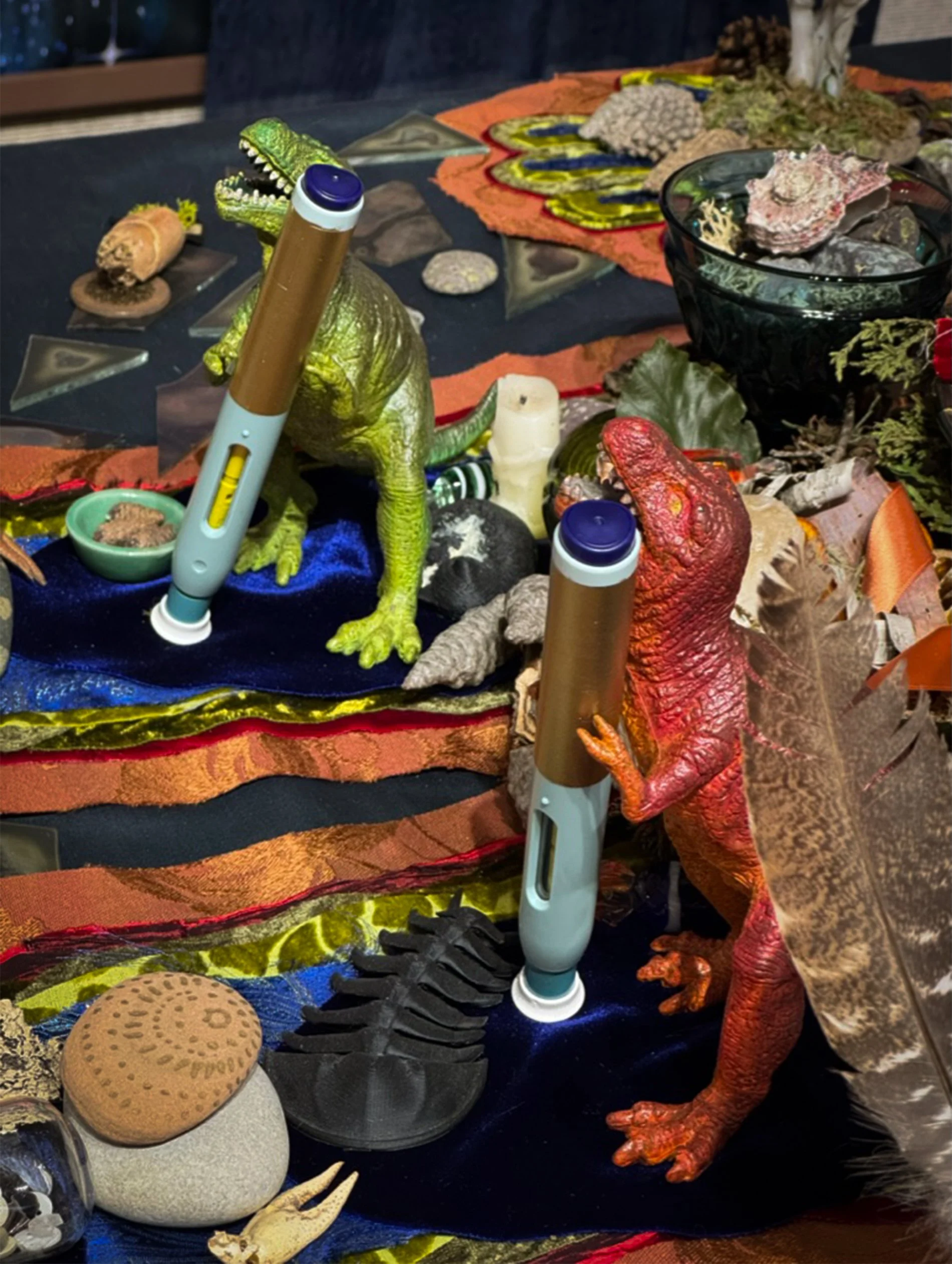
Sulais, E. A, Louis, E., Bokemeyer, B., Gecse, K. B., Parkes, G. C., Parkes, M., Selinger, C., Munsaka, M., Liu, M., Crooks, J., Finney-Hayward, T., & Raine, T. (2024). Differences in the adverse event burden of corticosteroid use in inflammatory bowel disease as reported between adverse event reporting systems and a patient questionnaire. Journal of Crohn’s and Colitis, 19(2), 1-10. doi: 10.1093/ecco-jcc/jjae138
Syrda, Joanna (2023). Gendered housework: Spousal relative income, parenthood and traditional gender identity norms. Work, Employment and Society, 37(3), 794-813. https://doi.org/10.1177/09500170211069780
Tauber, A. I. (2015). Reconceiving autoimmunity: An overview. Journal of Theoretical Biology, 375, 52-60. DOI:10.1016/j.jtbi.2014.05.029
Vaisvaser, S., King, J., Orkibi, H., & Hassan, A. (2024). Neurodynamics of relational aesthetic engagement in creative arts therapies. Review of General Psychology, 28(3), 203-218. DOI: 10.1177/10892680241260840
Van der Kolk, B. A. (2014). The body keeps the score: Brain, mind, and body in the healing of trauma. Viking.
Warrier, V., Greenberg, D. M., Weir, E., Buckingham, C., Smith, P., Lai, M.-C., Allison, C., & Baron-Cohen, S. (2020). Elevated rates of autism, other neurodevelopmental and psychiatric diagnoses, and autistic traits in transgender and gender-diverse individuals. Nature Communications, 11(1), 3959. https://doi.org/10.1038/s41467-020-17794-1
Weeks, A. C., Kowalewska, H., & Ruppanner, L. (2025). Take a load off? Not for mothers: Gender, cognitive labor, and the limits of time and money. Socius: Sociological Research for a Dynamic World, 11, 1-17. DOI: 1177/23780231251384527