Systems of Resilience Part II: Evidence
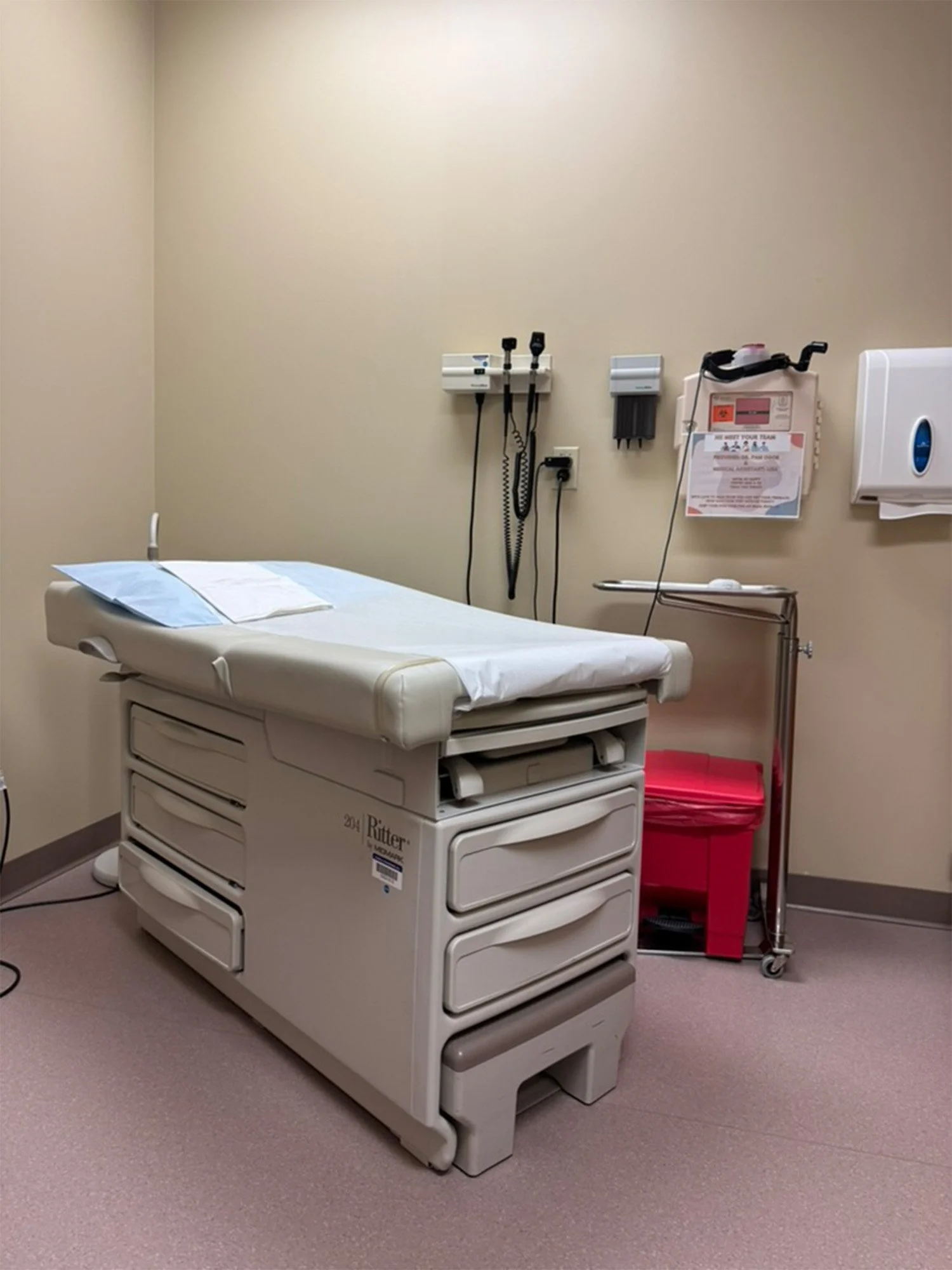
Exam room, upon further examination
If a “secret-research-island” represents rebellious freedom and escape from societal constraints, what does the opposite approach look like? What constraints did Wendell leave behind and was there a price? What tradeoffs are made when we reject embodied knowledge in favor of documented proof and accountability?
In my pursuit of understanding the US healthcare system from a different vantage point and a desire to provide care to others, while simultaneously fulfilling academic requirements for a master’s program, I decided to take an internship in a medical setting. This was not a light decision nor a particularly practical one.
As someone who has been in the role of a patient and parent-of-a-patient many times, I have a long history of experiences within healthcare settings that are specific to my life journey, my identity, and my biology. Receiving care can be life-affirming and necessary but is also contingent upon compliance. It is always at the mercy of someone else’s expertise, at the insurance companies’ discretion, and the insurance is contingent on someone in the household maintaining a level of employment that grants it. One must continually prove one’s needs and deservingness while always evaluating the degree of trust to be placed in the doctors, nurses, lab technicians, pharmaceutical companies, researchers, electronic record systems, and government regulations that keep the whole thing running. With a chronic illness, this is not a straightforward relationship or simple narrative with a happy ending. It’s a complex and ongoing series of negotiations; a constant weighing of risk versus benefit, trust versus caution.
What follows is not a victim narrative; it’s a story of inconvenience and frustration, not catastrophe. Nor is it a take-down of the US healthcare system; I’m grateful many times over for modern medicine and the suffering and death it can reduce or prevent. This is additionally not an invitation for advice-giving or argument over my own or my family’s care decisions. We have made our own well-informed decisions and respect the rights of others to decide differently.
Rather, what follows is a demonstration of how nested hierarchical systems interact and at times conflict with one another, not by design, but by the nature of complex systems and how they theoretically organize.
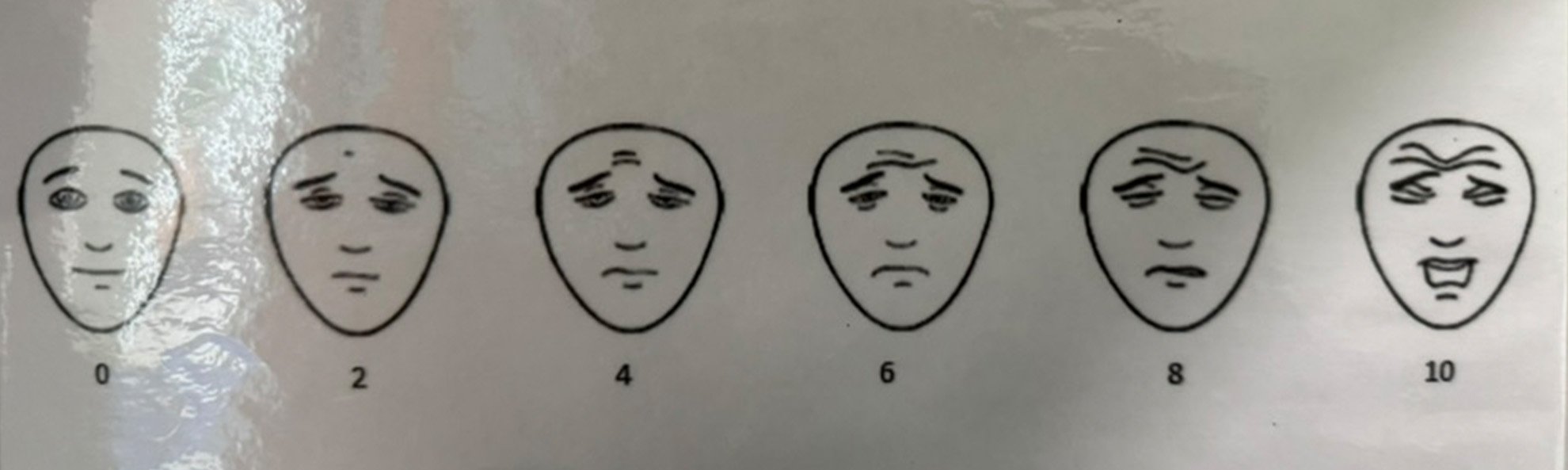
Bieri Pain Faces
Initially, I’ve been pretty hesitant to post this article because it reveals some personal health information and choices, but I feel very strongly that it is imperative we understand our societal structures from a multitude of perspectives and learn to hold the resulting contradictions. Doing so allows us to recognize and name the patterns that energy, resources, and power can take as they move through the systems we live within and interact with. It takes on a specific shape, a vertical eddy or whorl; a fractal that emerges at one scale and then again at another. There are any number of other systems we could look at; our educational system, our justice system, our natural ecosystems. Healthcare just happens to be a personally relevant and biologically interesting example.
Part of the reason I wanted to pursue this internship was to make a healthcare setting more fully human for others; to meet them with art and an empathic ear, instead of another procedure or test. I also want to witness and affirm the experiences of others. The journey of a cancer patient will likely be quite different from that of a lupus patient and the journey of a heart transplant recipient will undoubtably be different from a stroke survivor.
Medical science has done much to extend and improve quality of life over the last century and a half and I don’t believe anyone goes into a medical profession for nefarious reasons, but the system that provides and sustains this care is deeply entangled and was not built overnight. It grew incrementally and responsively as a superorganism of sorts over the course of many generations; each new study and each new discovery adding to the body of knowledge, developing standards and measuring outcomes. Each problem is patched with a solution, and each solution creates a new set of protocols. Every answer poses more questions, and every treatment comes with a list of potential risks and side effects. All of this has taken place within the restrictive metabolism of our economic and political systems.
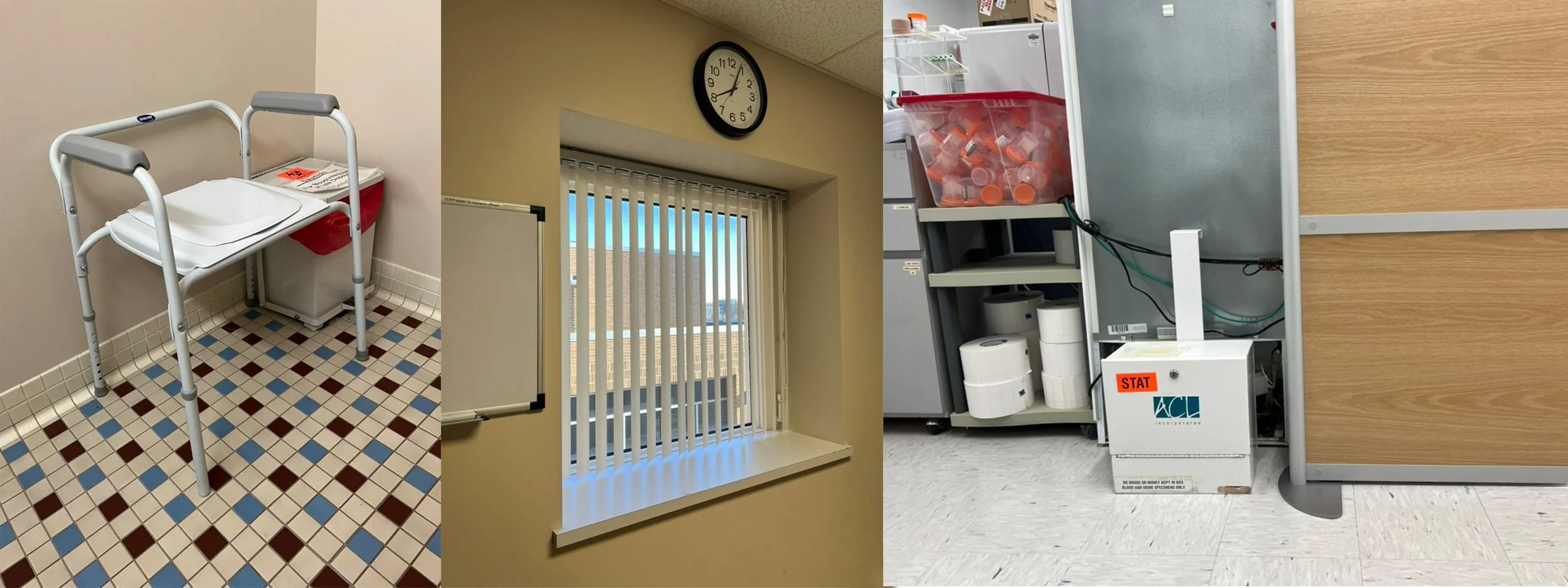
Photos of “patient time”, my time and patience
One of the benefits of modern medicine that I believe is of vital importance is vaccination. This is not a simple or uncontroversial viewpoint. I don’t take this stance based on politics or without reservation. But I do know my family history and that each of my grandparents lost siblings in childhood, some of them to vaccine-preventable illnesses. One of my siblings lived and worked for two years in a country that had limited access to immunizations and modern medicine and watched families lose babies and young children as a result. My own parents made sure myself and my siblings were always up to date on our immunizations and we went to schools that required it. With all of this in mind, last fall, while making the difficult decision to start an immune suppressant therapy, I decided to get a booster of the MMR vaccine. Measles outbreaks were all over the news and a few cases had been reported in our state. So, I went to the pharmacy and got a single booster shot for MMR.
Fast forward to this summer and starting the onboarding process for internship; I was sent several links and instructed to create accounts on various platforms to determine my eligibility and initiate a thorough background check. I filled in dozens of text fields, uploaded images of documents, and sent a photo for my ID badge. But everything ground to a halt when it was noted that I had “only received one dose of MMR vaccine when two doses are required for adequate immunity”. I went back and took a closer look at my state immunization record and sure enough, the records for my childhood MMR doses were blank only showing the one dose I got last fall. The solution, I was told, was simple: go get a second dose of MMR. The onboarding personnel sent me a lab order.
However, the reason I got the dose before starting the medication, was because I can’t get that particular vaccine while receiving immune suppressant therapy. Disclosing this medication triggered another alarm because it meant I was at an increased risk for TB. This disclosure was also interpreted as me requesting an accommodation or exemption (not what I’d intended) and initiated a whole other procedure with a separate committee reviewing my case and asking for documentation. Further complicating this is the fact that the immune suppressant therapy is the reason I’m physically able to take on this active and demanding internship that involves hefting art supplies around a huge campus. So the medication that makes it physically possible to do this work was also serving as a barrier to entry. You will notice this is a feedback loop of sorts.
I called my mom. She couldn’t find a paper copy of my immunization records but insisted “Of course you got the measles vaccine! I had a terrible case of measles as a child and didn’t want you kids to go through that. Plus you needed it for school.” I tried to remember all the times in my life I needed to present my immunization records and how there had never been a problem before. It must have been an error at some point in data entry or a glitch when files were moved from one system to another. While my immune system itself is glitchy as hell, my cells certainly didn’t remove the vaccine from their memories.
The solutions ended up being as convoluted as the problem. It took visits to four different clinics, two different blood draws, and digging through a 20-year-old file box in my basement to prove what my cells already know. They know they can produce adequate antibodies to fend off measles, mumps, or rubella should I happen to be exposed.
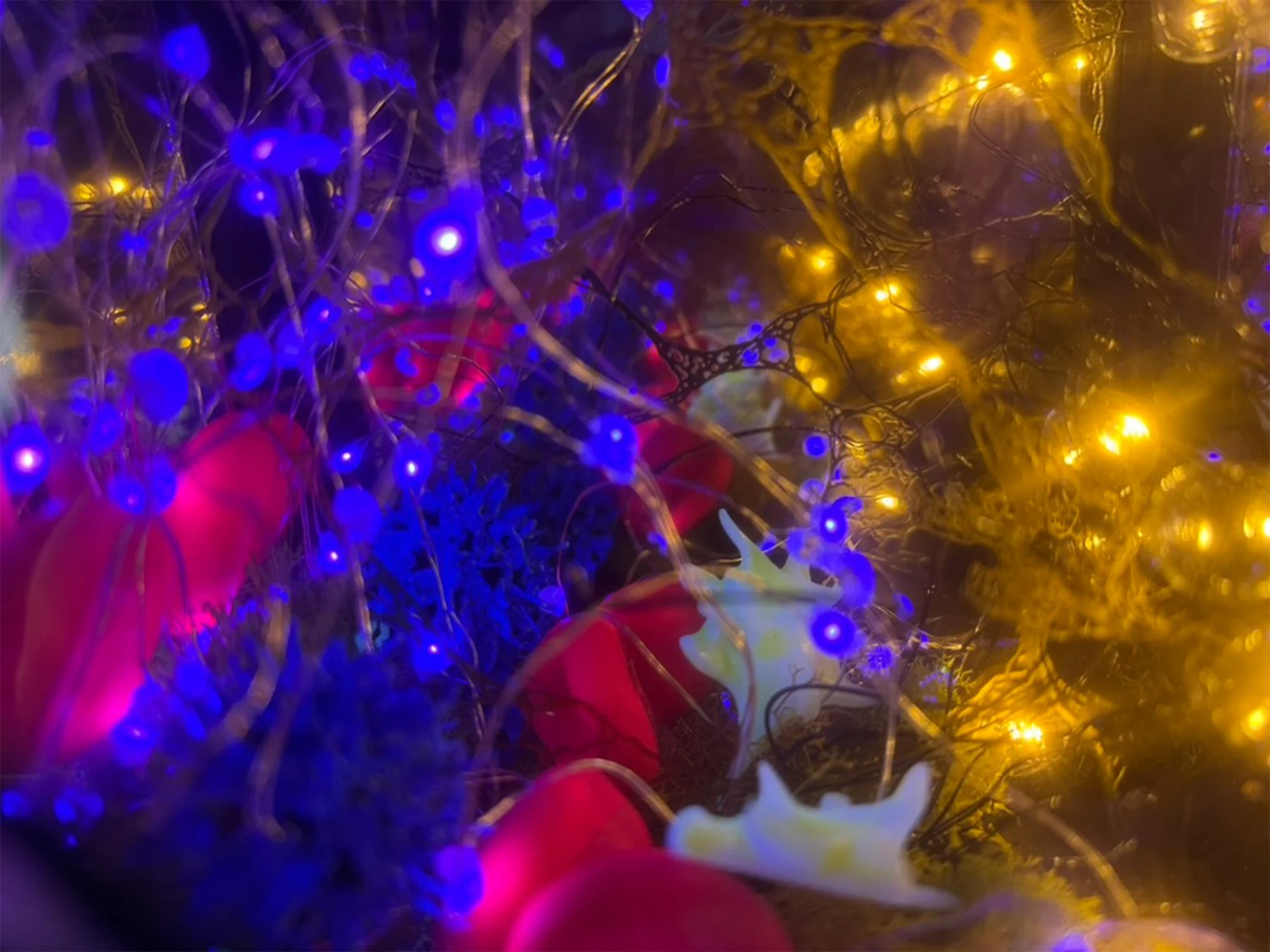
Artistic depiction of my immune response: polymer clay, found natural objects, fairy lights, mirrors
And how do my cells know this? They certainly don’t go through a rigorous process of formulating a hypothesis and isolating variables. They don’t cleverly design experiments to falsify their theories.
So how do they learn to create the right antibodies? Through a process of random cellular events and combinatorial iterations. To put it in crass internet terms, when exposed to a vaccine, my B cells “fuck around and find out” (FAFO). They just try stuff until it sort of works and then replicate the result in daughter cells which then go through another stochastic process to get things a little closer all the while communicating and initiating a whole cascade of processes with other cell types and signaling proteins, interacting with my nervous system and my hormones along the way (Lui et al., 2025). This is not a hierarchical process controlled by a central authority, but a swarm response of interacting networks. And sometimes those networks fend off the measles and sometimes those networks circle back and attack themselves. My white blood cell count is chronically a bit low (not dangerously low, just a little low) because my system feeds back on itself as part of an autoimmune disease process.
So, as I entered the larger system as a potential care provider, my wonky immune system triggered a swarm of alarms there too. I had activated the hospital’s immune system.
Each iteration of response aims to get closer to the truth while simultaneously initiating dozens of unintended processes. Each answer creates more questions. Each fix creates unintended side effects. It’s a cross-scale perturbation that ensures safety not just through compliance, but evidence of compliance. One must provide proof for validation each step of the way.
There is a layered experience of feelings here: gratitude that the system has protocols to protect the most vulnerable among us, but also frustration that the burden of proof falls on the individuals trying to navigate the system. As a helpful woman behind a desk instructed me to go to yet another clinic she commented, “I’m sorry this is such a mess. They shouldn’t make it this hard for you to work for free.” Talking to a real person in a physical space was very different from the slew of messages I’d received via email up to that point.
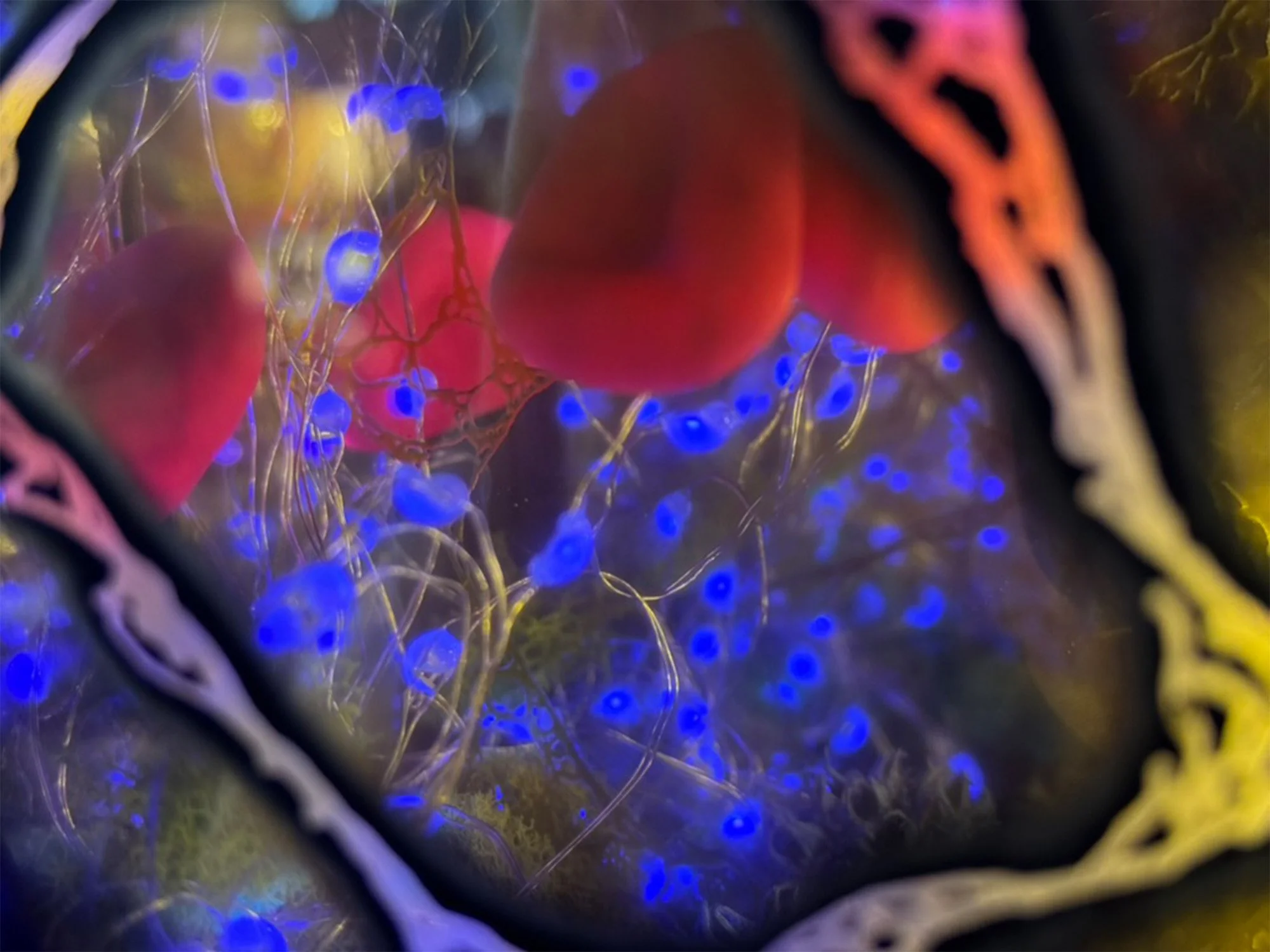
More immune system art: it makes my “littles” more tangible if I can hold them and play with them
One of those past times I had to provide proof of immunization was more than twenty years ago when I briefly volunteered as an emergency medical technician (EMT). I went through the 6-month training program, licensure tests, and rode along in ambulances finding it all very exciting and interesting. Until late one night, responding to a nursing home, the lead EMT got into a disagreement with the facility’s staff. I remember helping move an elderly woman onto a gurney. She was clearly distressed and struggling to breathe. I took her vitals all the while thinking none of this looks good. She was suffering from congestive heart failure, and the staff of the home were insisting we take her to a particular hospital that her family preferred and was covered under her insurance plan. The lead EMT wanted to take her to a closer hospital or intercept with a paramedic who could do a procedure to drain the fluid filling her lungs.
The EMT lost the argument, and we drove nearly twenty minutes to the family’s preferred hospital. During the drive, her labored breaths gurgled until they stopped. Her eyes, terrified, looked directly into my own. I held her hand the entire way, knowing it was the only thing I was qualified to do in that situation. I never got back in an ambulance. This was a job for someone emotionally stronger than my 23-year-old self.
All of this resurfaced in my memory as I dug through boxes of old files on the basement floor, eventually finding a manila folder holding my EMT paperwork. In it, I found a crusty, yellowed photocopy of my childhood immunization record. This combined with multiple lab results finally cleared me as “safe” to enter the system.
This is not the first or last test I will have to pass. Whether background checks, onboarding procedures, licensure exams; it’s not enough for me to have embodied knowledge and lived experience. I must be able to prove what I know using systems of imperfect metrics.
This is what philosopher Havi Carel (Kidd & Carel, 2017) was talking about when she described the epistemic injustice of healthcare; it’s the tension between the individual’s subjective experience of their body with the system’s need for objective proof. Truth itself is useless without a paper trail.
It’s not hard to imagine why Wendell Beckwith wanted to escape rather than join the dominant systems of his society. He rejected the rigors of the scientific process and the hierarchy and pre-laid path of academia in favor of a deeper level of system. According to family, he never sat comfortably within the constraints of business management structures and procedures either. He ultimately cut out the mediators and went directly into contact with the unknown, collecting and documenting information in his own fashion. He wanted the natural freedom to just FAFO. Not all those who wander are lost.*
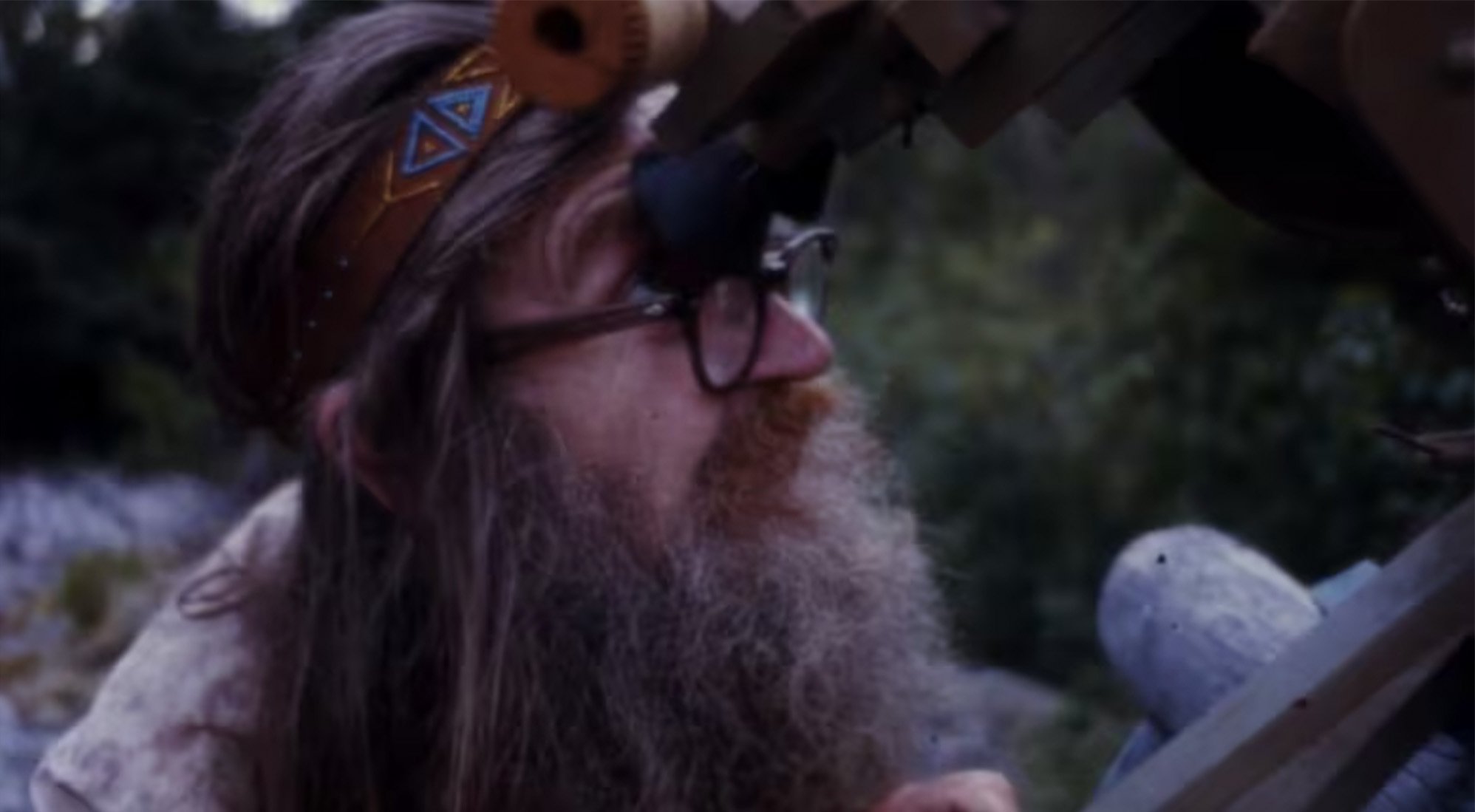
Wendell peering through the lens of a handmade telescope
-photo still from “In Search of Wendell Beckwith”
But I do wonder what it cost him? I wonder if he’d had access to early medical care would he have died at age 64? The stories I’ve heard over the years have varied as to what exactly happened in the end. The interviews in the film (Hyder, J. & Thunder Bay Museum, 2021) describe him briefly arguing with Harry Wirth before having the heart attack, though I’d heard another scenario at some point that led me to believe it was the Canadian authorities. Either way, he was many, many miles from the nearest hospital. Certainly, more than twenty minutes away.
And so there is security within our larger systems, but we trade for it by sacrificing degrees of personal autonomy. When we sign an informed consent, we submit ourselves to the authorities, the experts. When I enter the role of caregiver, I ask others to do the same. I ask them to trust me and submit to my presumed expertise. This is a forfeiture of embodied knowledge in exchange for a much larger, but more course-grained body of knowledge. The body in question is a matter of scale and organizational hierarchy, and as artificial and inhumane as the healthcare system may look at times, it is built on biology in all its glorious imperfections and contradictions, holding moments of both beauty and terror.
In the following weeks I was notified that my onboarding (and everyone else’s) would take a little longer than usual; the system itself was being updated. Perhaps this would be the incremental improvement that would make things easier on the next batch of interns. Or perhaps the hospital is a living process as much as it is a physical structure and this is just another developmental phase.
Carel, H. (2018). Phenomenology of Illness. Oxford University Press.
Hyder, J. & Thunder Bay Museum. (2021, January 8). In search of Wendell Beckwith [Video]. Vimeo. https://vimeo.com/498373971
Kidd, I. J. & Carel, H. (2017). Epistemic injustice and illness. Journal of Applied Philosophy, 34(2), 172-190. DOI: 10.1111/japp.12172
Liu, Z., Dai, H., Cui, X., Liu, Y., & Dong, Z. (2025). Importance of B cells (review). International Journal of Molecular Medicine, 57(1), 2. https://doi.org/10.3892/ijmm.2025.5673
National Institutes of Health. (2024, January). Medline plus: Autoimmune diseases. https://medlineplus.gov/autoimmunediseases.html